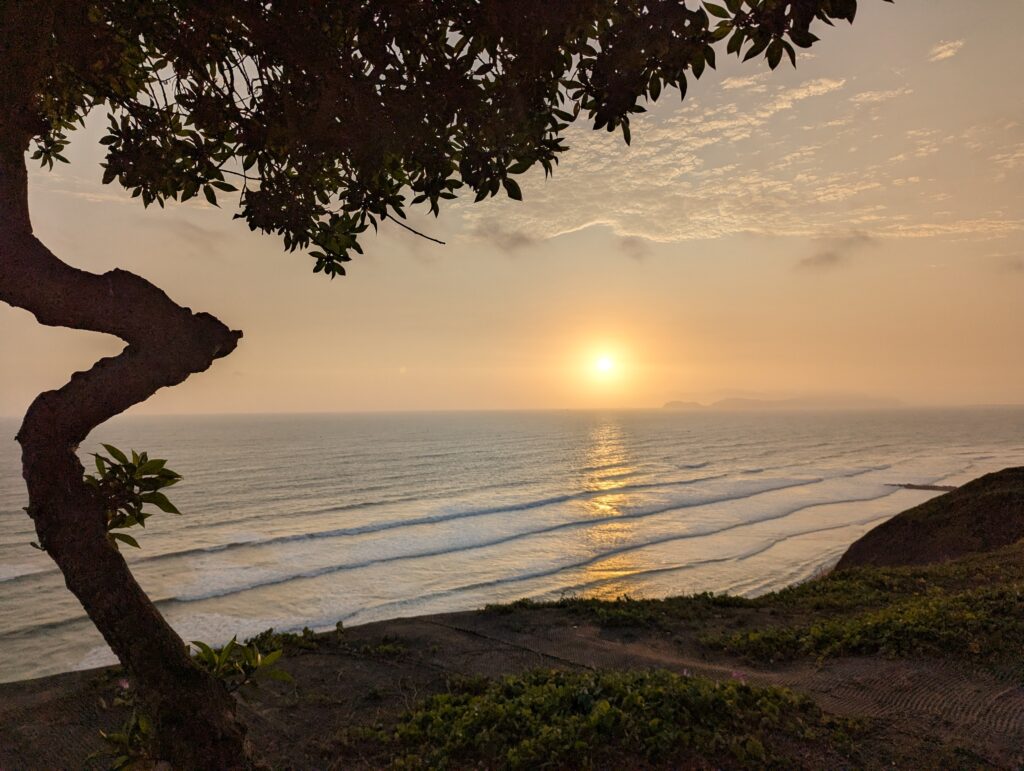
Lima
Location
Lima is the coastal capital of Peru.
We took a flight from Medellin to get there. We initially considered taking buses through to Ecuador, however the UK foreign office at the time recommended against visiting most of the border regions between Colombia and Ecuador as well as large parts of Ecuador itself, so we reluctantly decided that flying would be the best option.
Street Art
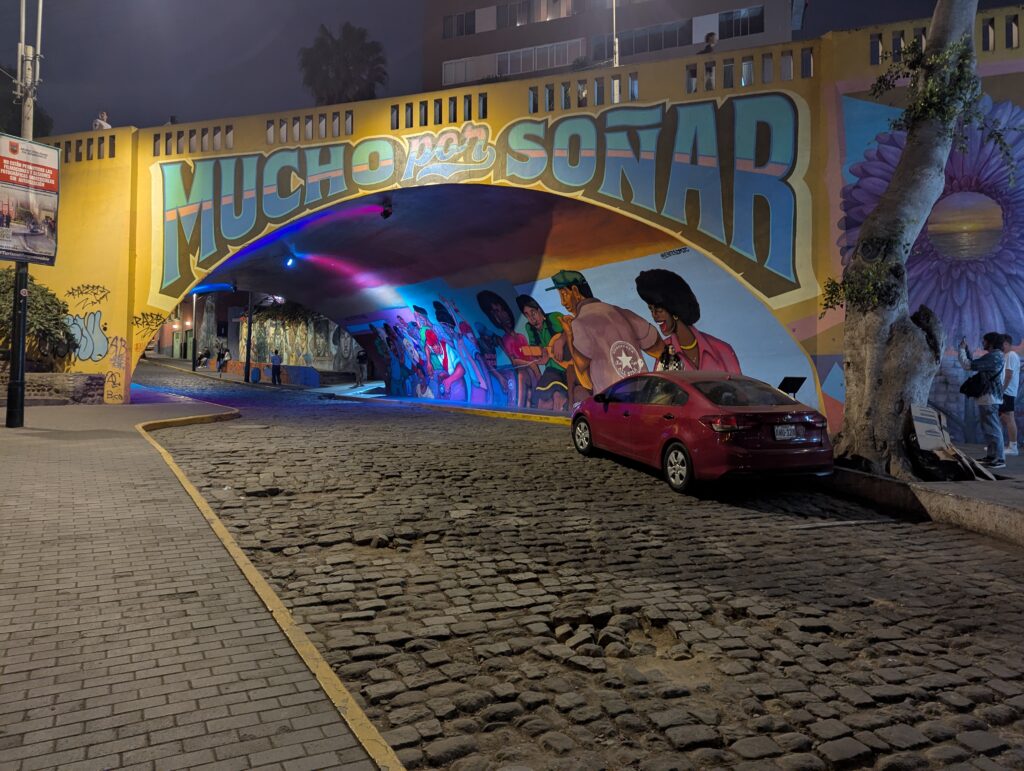
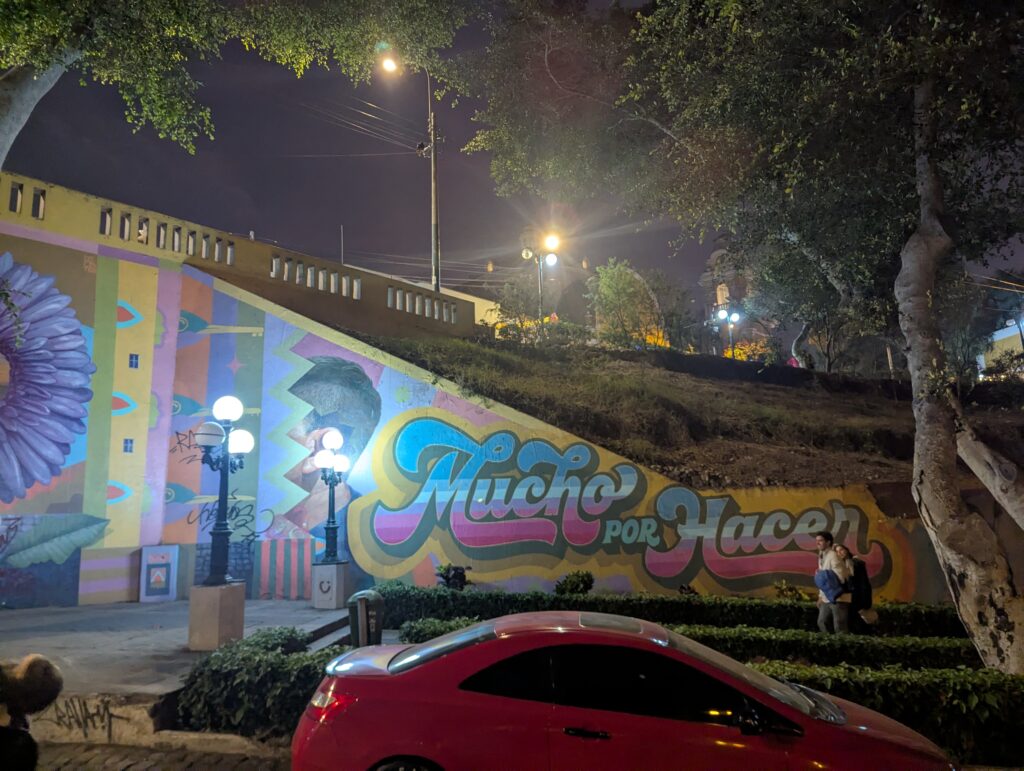
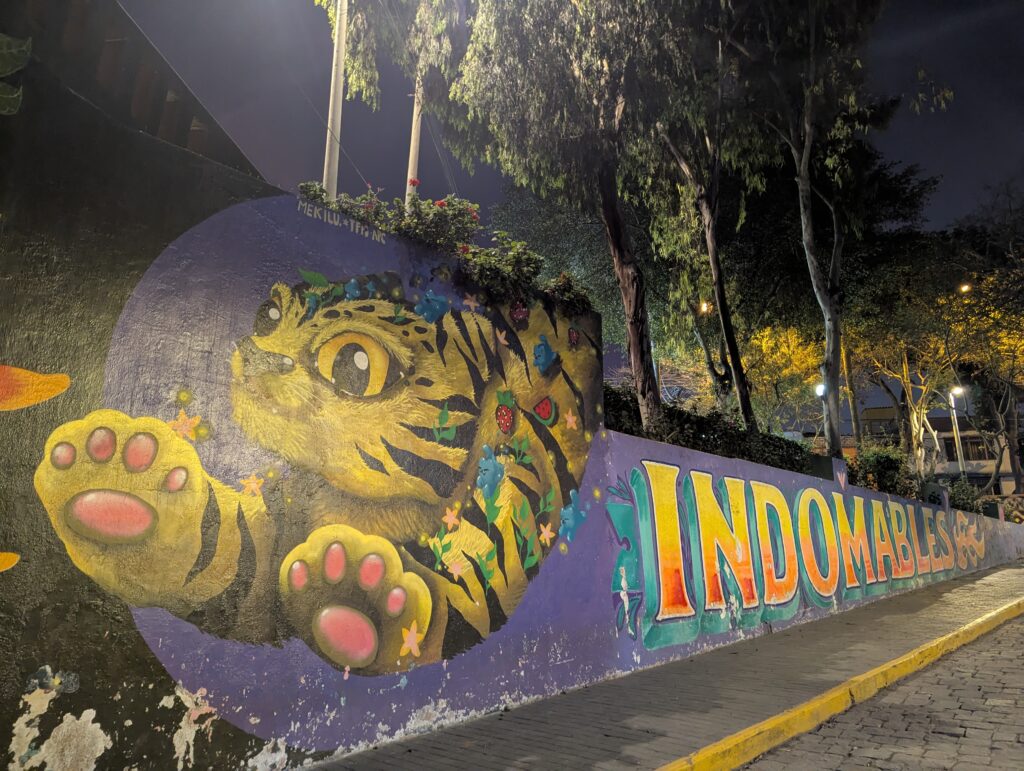
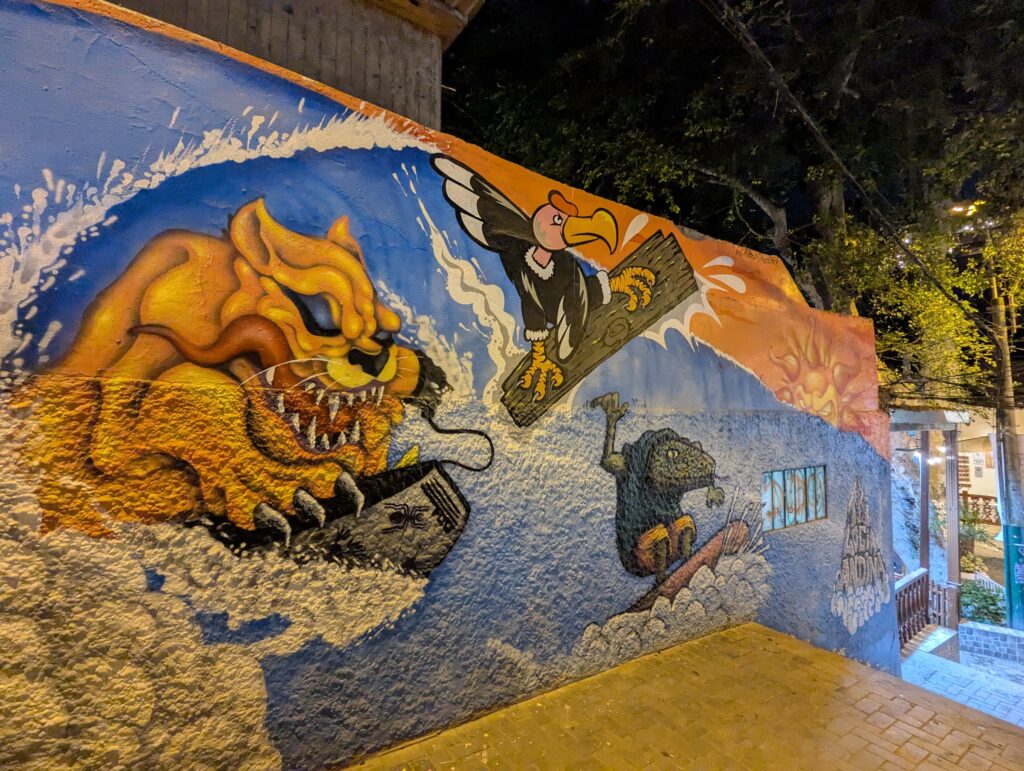
We toured the street are of Barranco. Some of my favourite images are pictured below.
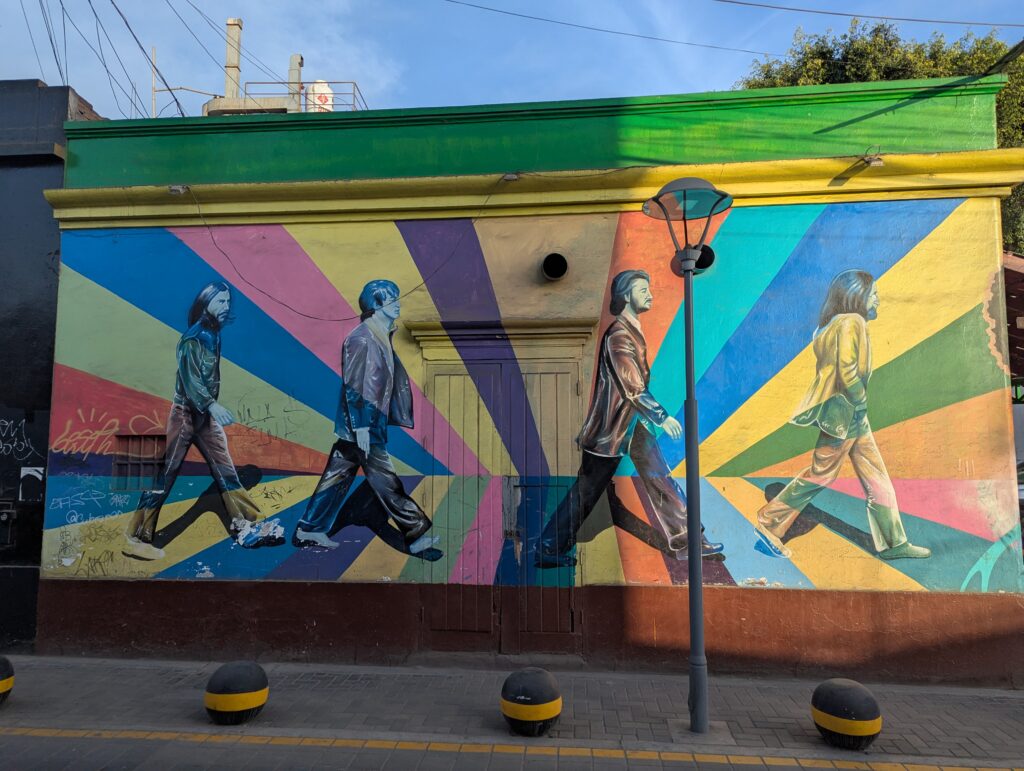
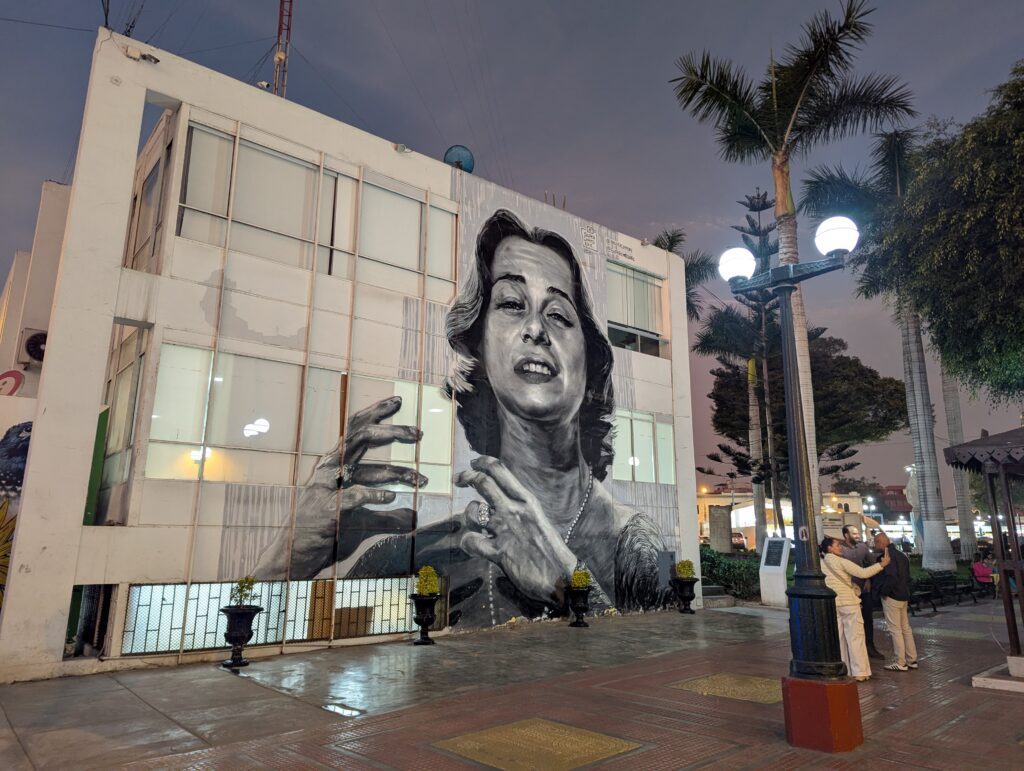
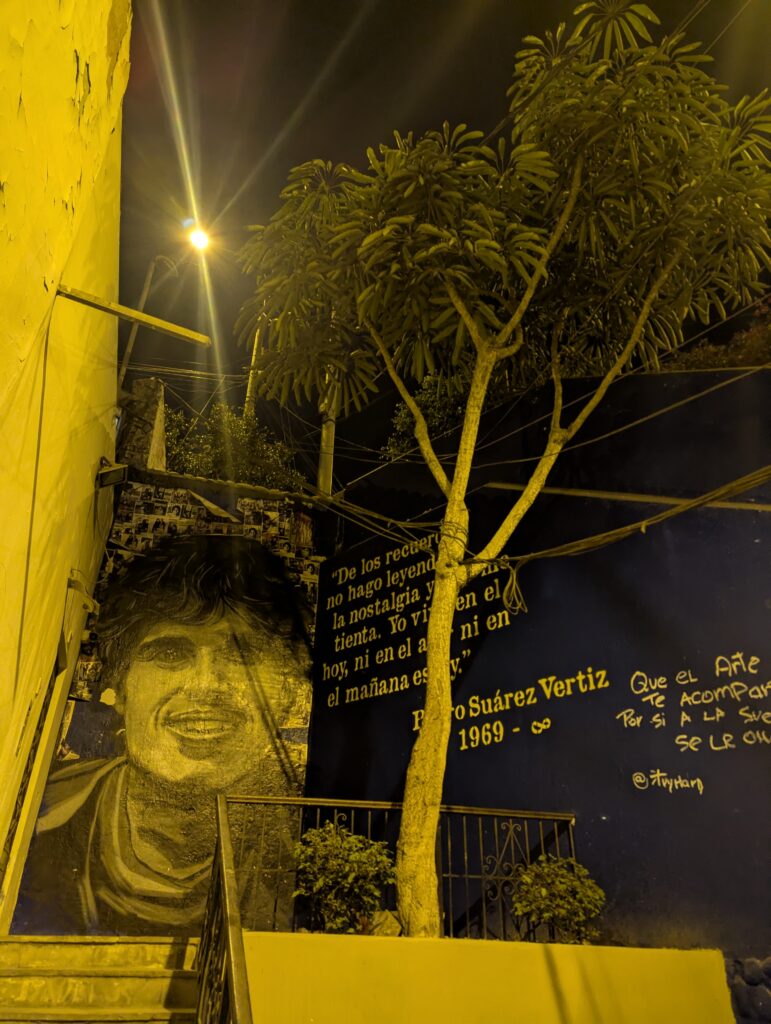
“I don’t make legends out of memories, nostalgia no longer tempts me. I live in the home, neither in yesterday nor in tomorrow.”
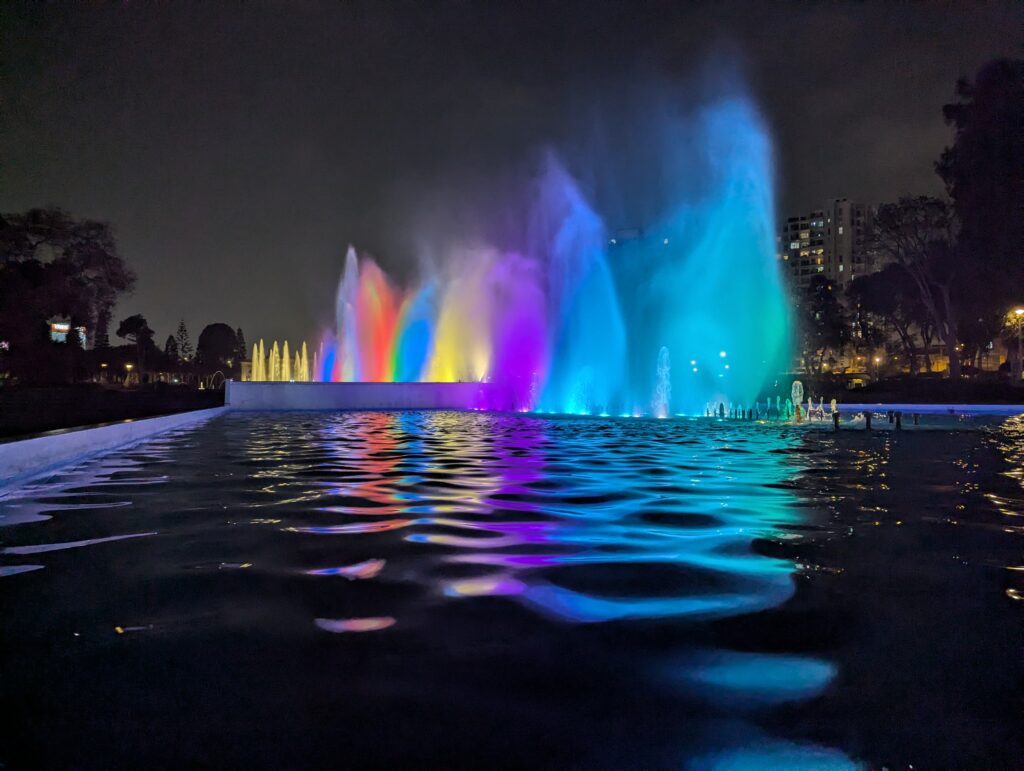
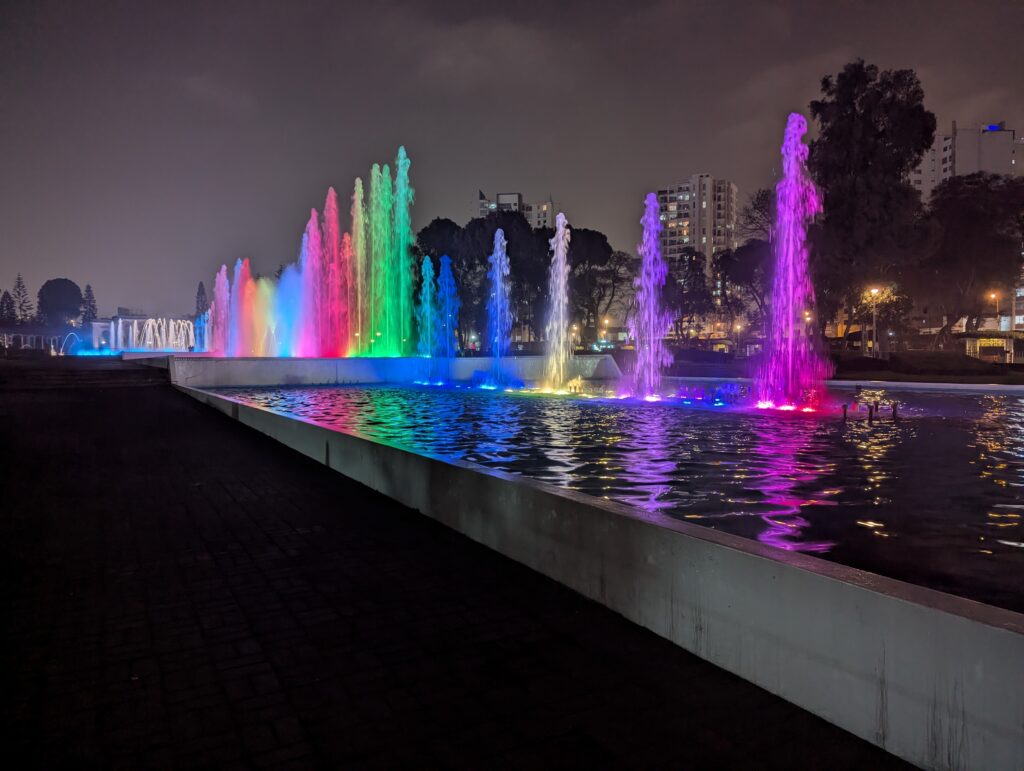
Magic Fountain
Miraflores
In Lima, we stayed in Miraflores, the most touristic neighbourhood of Lima
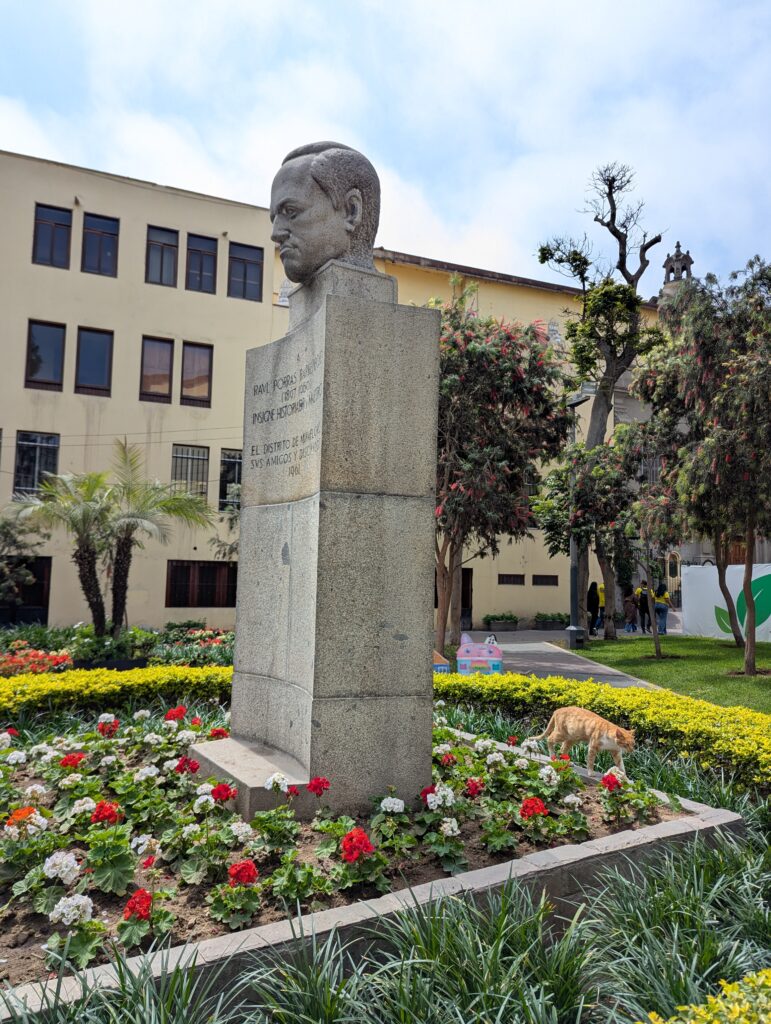
It is famous for being home to dozens of well-housed and looked after cats.
Originally the cats were introduced to counter a rat problem, before themselves breeding to the point of becoming a cat problem, before the authorities took active steps to control the reproduction rates of the cats.
We took a couple of walking tours in Miraflores and Barranco which quickly turned into food tours; Peru is famous for its food across South America and increasingly across the world. A lot of this heritage comes from the diverse range of ingredients that are native to Peru, for example, the potato originally comes from Peru and in Peru today there are somewhere around 3000 to 4000 types of potato! Two major factors in this diverse range of food are the diverse climates to which Peru is home, and the agricultural innovations that the Inka empire brought to its people, which I will talk more about in the Cusco blog.
We visited some great restaurants in Lima, a few are listed below.
Top of the list of recommendations is Isolina in Barranco, where we ate an incredible Lomo Saltado. This restaurant sometimes features in lists of the world’s best restaurants, but with huge sharing plates it was fairly affordable – I highly recommend a visit.
Next on my list of restaurants to visit in Lima is actually a chain that I believe has now spread as far as Colombia and Chile, but the original was in Miraflores and they all serve great food!
It is called “La Lucha”, the map location below directs to the first restaurant (the very first incarnation was a kiosk without seating – which still exists a few metres from the one below).
My final tip for food in Lima is more obscure; there is a place called Dörcher Bier in Miraflores.
Dörcher Bier is brewery that supplies beers to other bars and restaurants, but they also have half a dozen or so tap rooms. The interesting part is that it was founded in Pozuzo, a remote village in a jungle region of Peru that was established in 1859 as an Austro-German colony.
The brewery and the food menu draw from both the Austro-German heritage of the Pozuzo and the flavours, cuisines and ingredients of Peru and its jungles. The result is a menu that is both truly unique and delicious. Re-stocking from Pozuzo takes a long time, so menu items were in limited supply when we tried it, but everything we tried was incredible; my favourite was the Pozuzo sausage.
We finished our tour of Miraflores watching the sun set over the Pacific.