Bogotá
Most people on the flight from Spain seemed to be South American. The slightly curious looks we were greeted with seemed to indicate that we were noticeably tourists.
We had asked our hostel to arrange a pick-up for us from the airport thinking this would be the safest option in an unfamiliar city. We exchanged names and selfies with the driver over WhatsApp, and following a slightly unexpected delay getting our bags x-rayed to leave the airport, we found him holding our names in the foyer and then were on our way in a relatively low-key ‘taxi’.
We were entering Bogotá at around 10PM on a Sunday which is not the most reassuring time to take your first glances at a new and reputationally dangerous city. We drove through some pretty rough, desolate looking areas and saw little in the way of attractions.
Our taxi driver turned off the main road and drove around a block for no obvious reason. We exchanged glances with each other perhaps fearing something sinister was about to happen, but he made his way back to the main road and we arrived safely at our hostel.
As we settled in to sleep we agreed we would feel safer in Ubers from now on (they are tracked, have security features in the app and are cheaper anyway). Privately I’m pretty sure we both went to bed wondering if we had made the right decision to spend 3 nights in Bogotá .
Bogotá is the enormous Colombian capital – 40km by 20km in size with over 8 million habitants. It is on the verge of megacity classification.
Morning brought our first opportunity to meet the city in daylight. The views returned were dazzling. The city looked busy, exciting and lay in the shadow of a huge mountain that was hidden in the darkness the previous night.
Our hostel was in the area “La Candelaria”, the historical centre of Bogotá.
It is home to famous Colombian museums, a university, lively bars and cafés, theatres and markets, all of which creates a vibrant mix of history and culture that make it the most popular area of Bogotá for tourism.
We started with a “free” (tips-based) tour of the city with “Beyond Colombia”.
The tour was excellent, it covered history, culture, and did not shy away from sensitive issues. (In general Colombians prefer not to discuss the series Narcos, they do not want to be seen as a drug tourism destination and tend not to see Pablo Escobar as a cult hero but more of a narco-terrorist, yet the topic is difficult to totally avoid in a tour of the Colombian capital).
Whilst officially Colombia is now at peace following a controversial deal in 2016, most people we have spoken to seemed to whisper that conflict continues, with new groups filling the vacuum left by those that negotiated the ‘peace’ and became ‘legitimate’ political groups.
Amongst the lighter parts of the tour was the speak-easy-like Chicha-house pictured below.
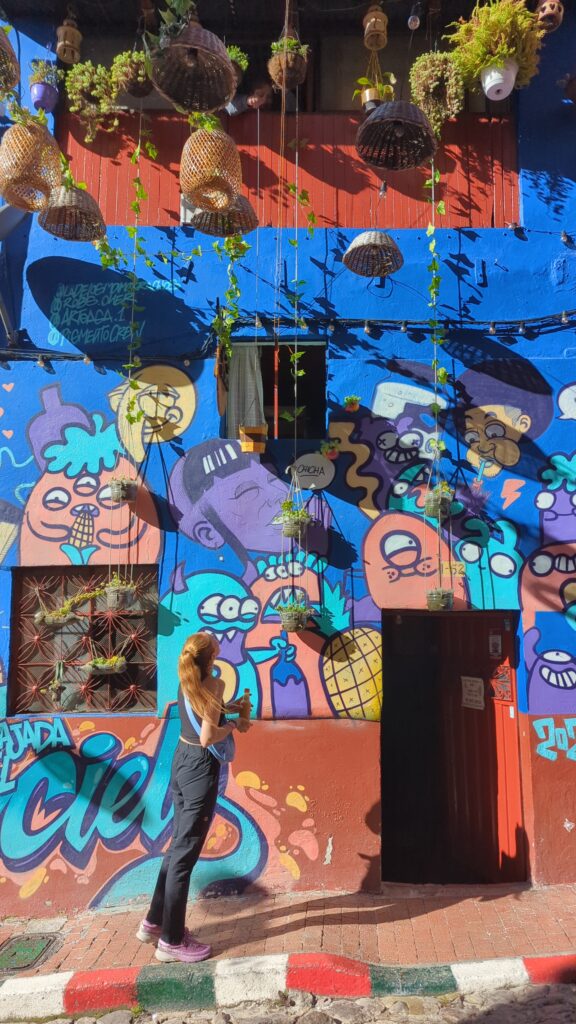
In spite of being outlawed in Colombia in the 1940s, Chicha is still drunk openly in Bogotá. It is still legal and drunk across the rest of South America, although exact recipes differ.
You can read a bit more here: http://en.m.wikipedia.org/wiki/Chicha#Colombia
We visited the highly rated Gold museum to start our second day. It costs less than a pound to get in and is well worth a visit. Using its impressive array of archaeological treasures, it takes you on a journey through hundreds of years, explaining both the technical methodologies used to shape and sculpt metal as well as the cultural references revealed within the exhibits themselves.
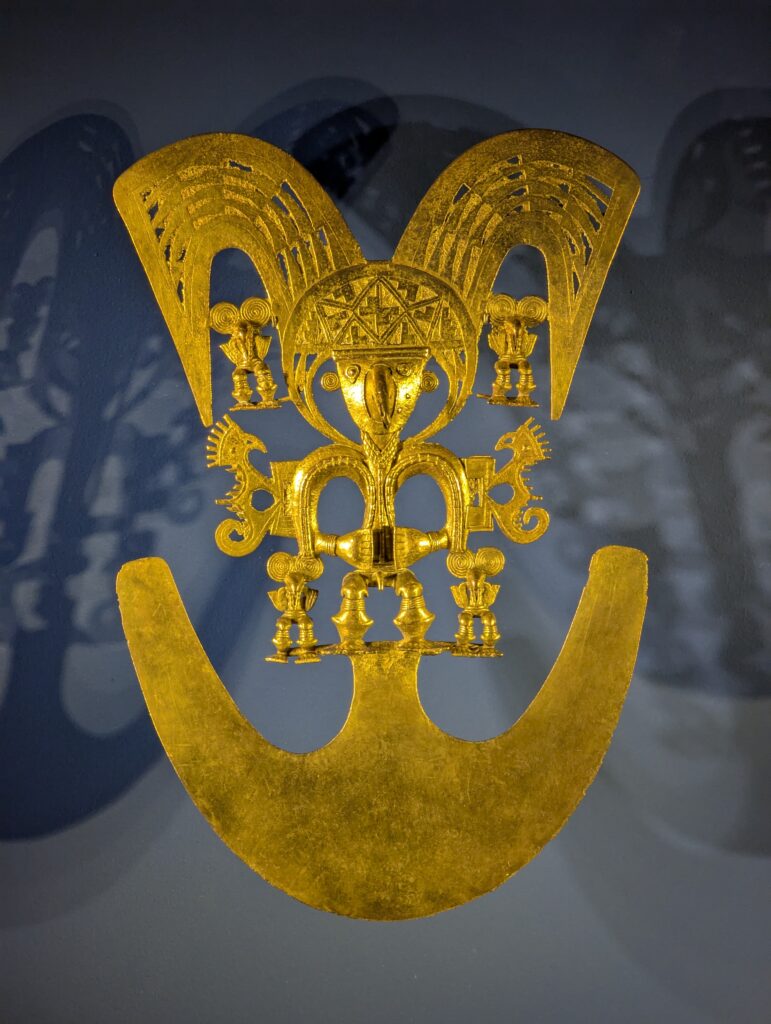
This is believed to be a decorative item that would have been worn by a spiritual leader.
There is a lot of symbolism in the piece and its (gold) material; symmetry, representations of the sun and references to birds and much more. There is a mix of animals and humans eluding to spiritual transformation which is an important concept in Shamanism.
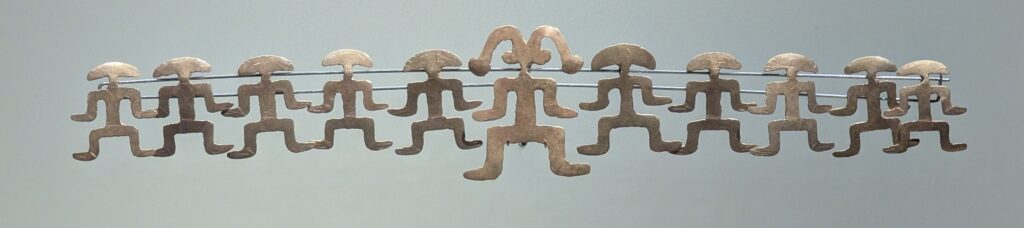
A symmetrical, connected group are shown with a clear leader. Shamans or leaders of those time had special importance, mediating with the spiritual world and ensuring cosmic balance.
Street art is widely visibly across Bogotá, we took a graffiti tour across the city.
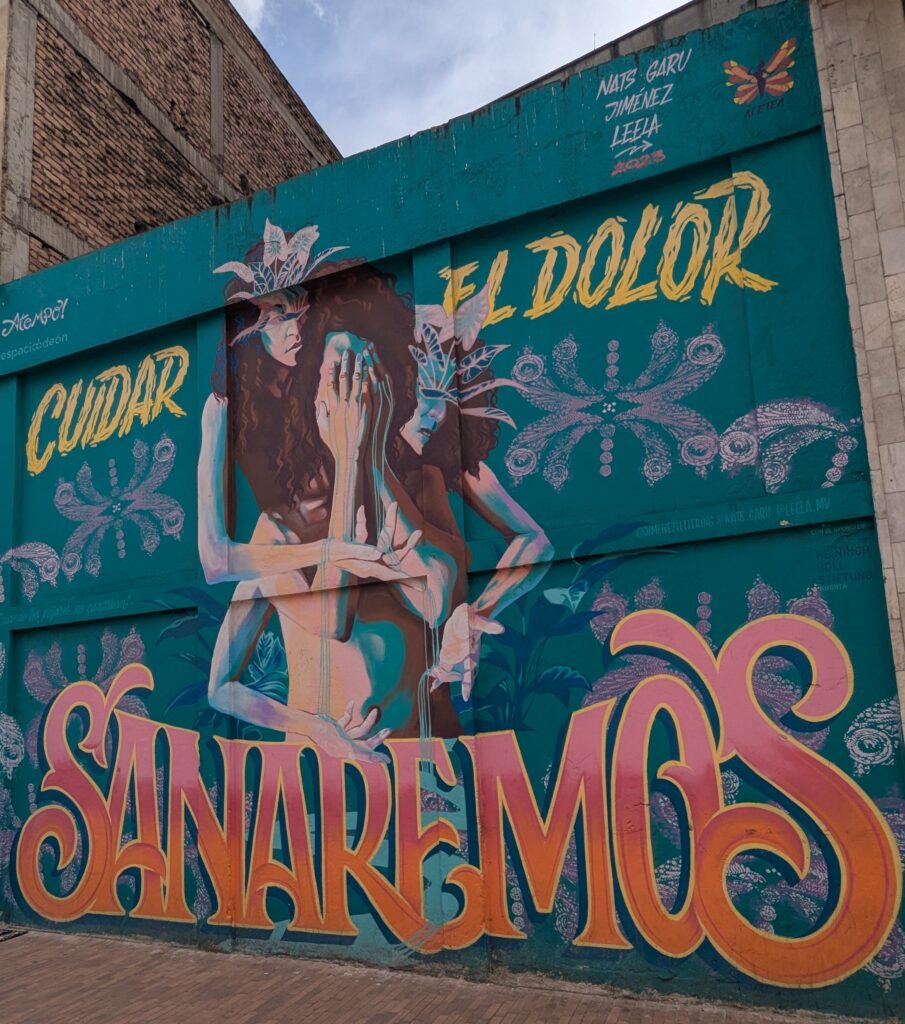
Cuidar el dolor (take care of the pain). Sanaremos (we will heal). Located on Avenida Jiménez de Quesada close to Carrera 5.
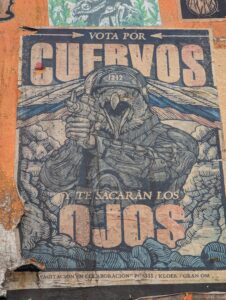
Vota por cuervos (vote for crows)
Te sacaran los ojos (they take out the eyes)
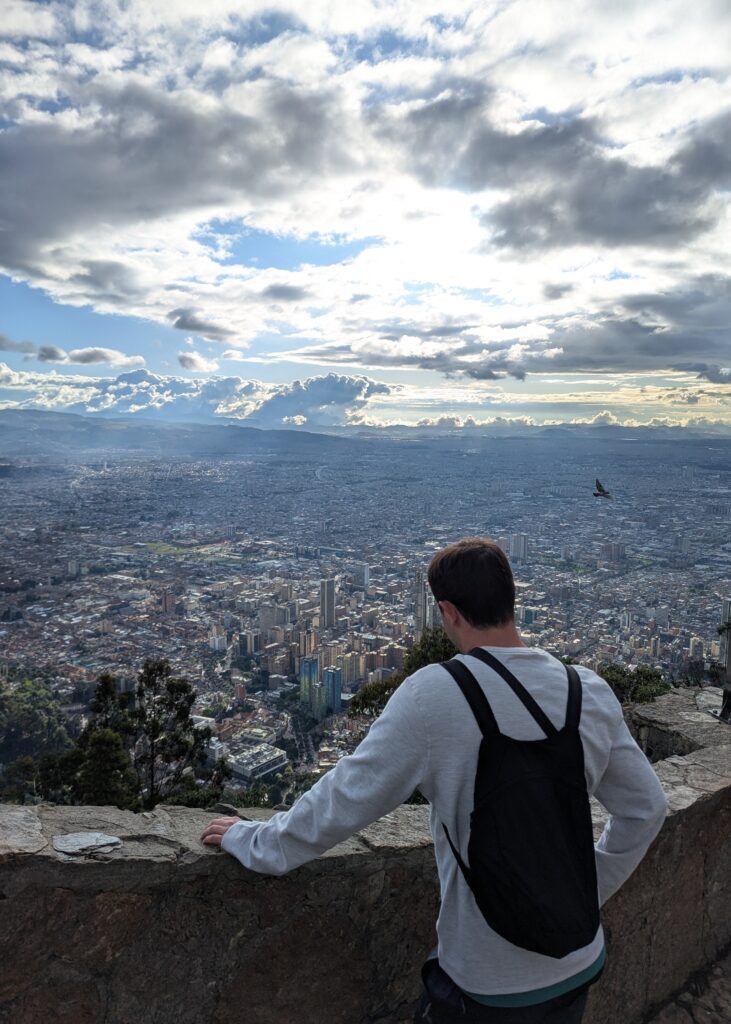
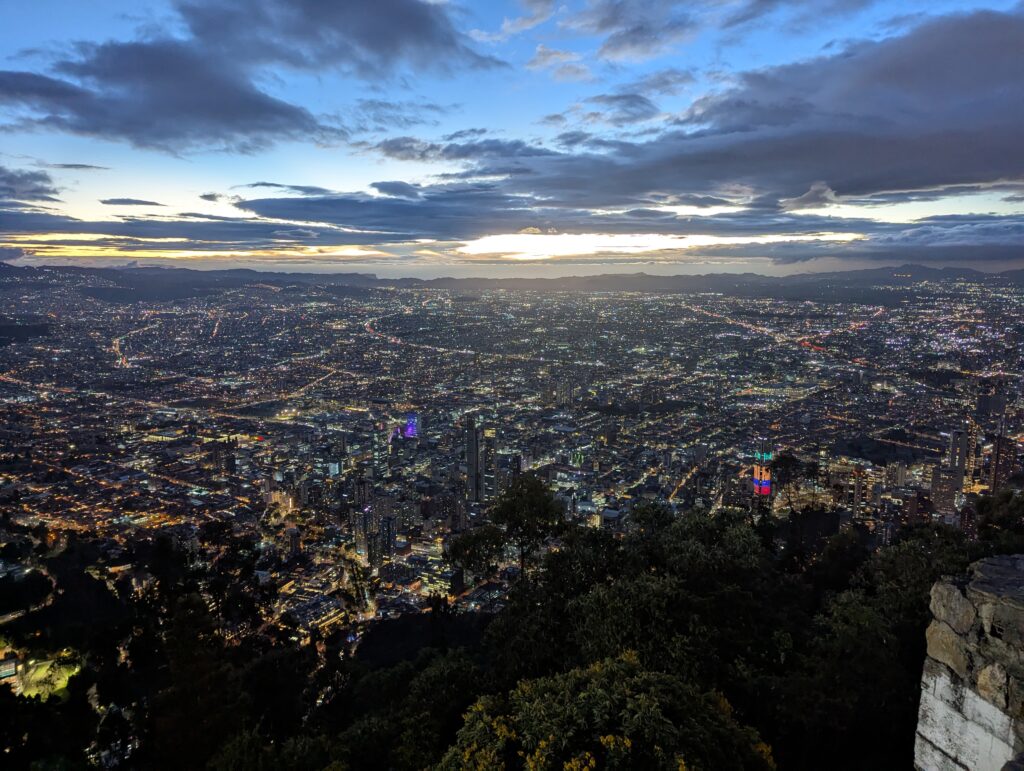
We finished our visit to Bogotá with a trip up the mountain that overlooks the city, Monserrate. Although the distance is walkable, we followed the advice of our tour guide and took a taxi to the cable car base to ensure we did not walk through any dangerous areas (where apparently gangs sometimes wait for tourists).
On the way there we struggled to understand why google said a typical visit lasts 2-3 hours, but once at the top we could see why; the sheer size of Bogotá takes time to absorb. Every where you look the city seems to expand further.
We waited from the afternoon to watch the sunset and see the city at night.