Cartagena
Cartagena is a very popular city on the Carribbean Coast of Colombia
Originally Cartagena was not in our itinerary, however with locals and fellow travellers alike repeatedly expressing shock that we were going to miss the city widely regarded as the best in Colombia, eventually the fear of missing something special grew too strong so we re-planned.
When originally organising the trip we had wanted to visit the North coast, but if you have a look at the interactive route map on the home page you will see that it’s a bit of a detour in comparison to our planned route from Salento to Medellín, and our general methodology on this trip is to take our time, enjoy the small things and not attempt to visit too much. However for Cartagena we suddenly decided to make an exception, so we jumped on a Buseta to Pereira and then flew directly to Cartagena.
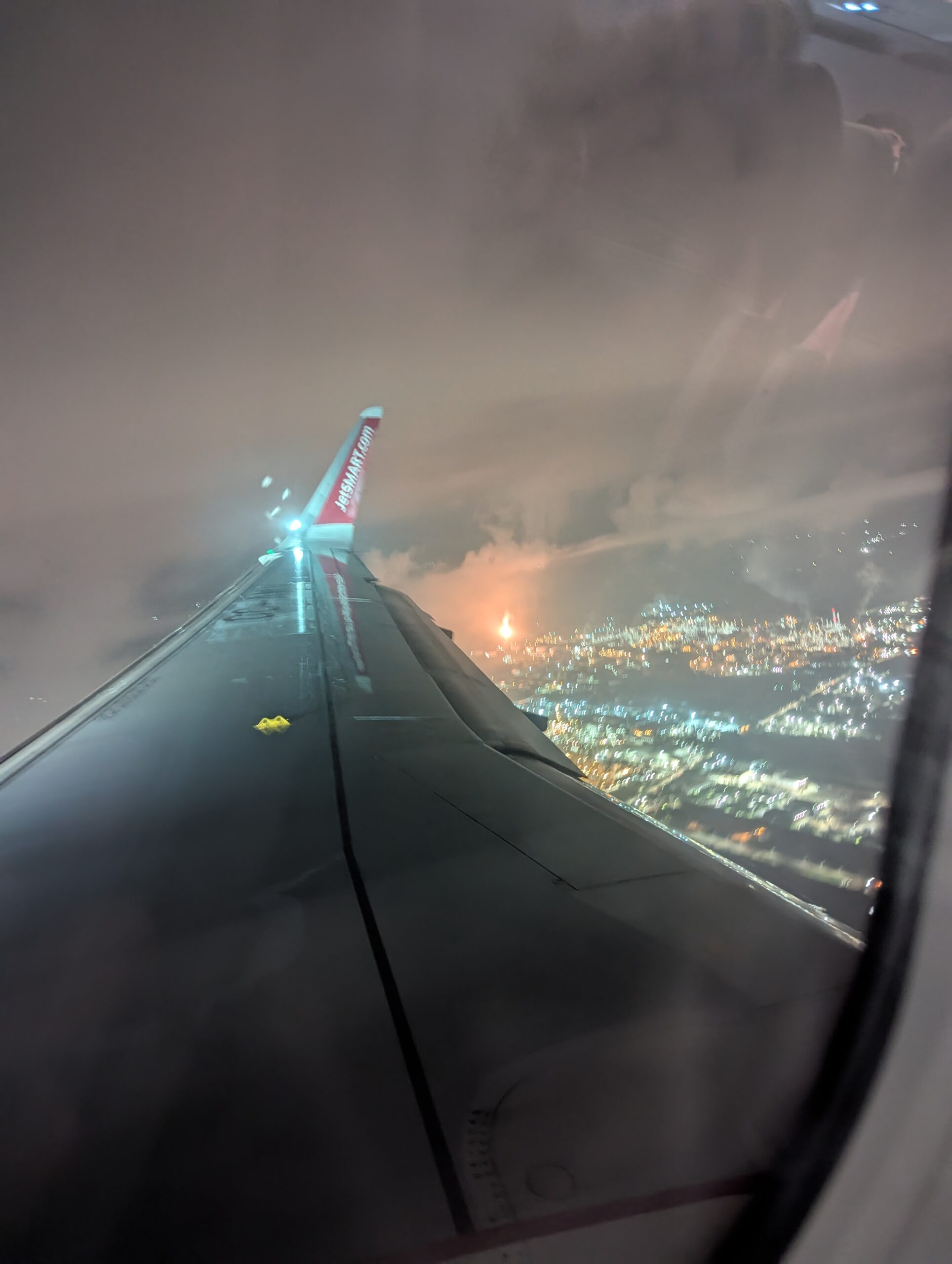
The contrast from our slow and magical time in Salento made our arrival feel more like a crash than a landing. Visible from the window of the plane were a couple of buildings that appeared to be on fire, the opening of the plane door unleashed a wave of heat and humidity that hit like an oven blast and with the taxi drivers in front of the airport forcefully demanding our custom; our senses felt under full-scale assault.
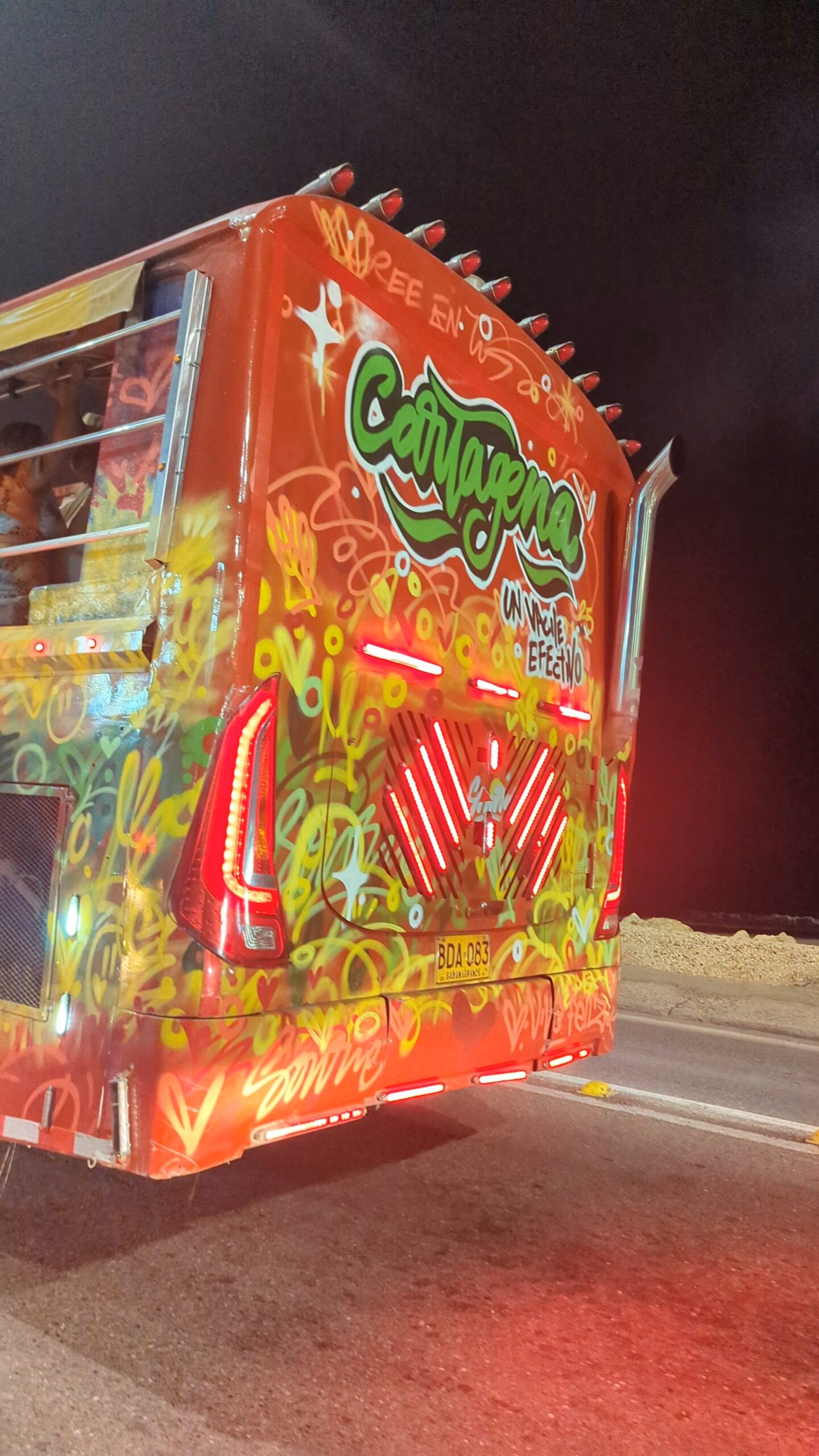
We side-stepped the mini-mob of vendors and instead ordered an uber. The vehicle slowly rolled towards us with completely opaque windows. No driver visible. No flash of the headlights or beep of the horn to reassure us either. We edged closer. Eventually the driver lowered his window and confirmed our names – he was indeed our uber driver. He happily explained to us that the reason for his 80% tinted windows was because sometimes he needed privacy in the vehicle, I’ll leave it to your imagination what he meant by that, but he insisted that 70% was insufficient. We drove past a neon-clad party-bus full of reggaeton-fuelled gyrating adults before eventually arriving at our pretty hostel safely. We collapsed onto the bed ready to sleep.
We sought some relief from the overwhelming heat and humidity via the air conditioning unit, which quickly obliged, before it began to release a small stream of water down the wall of our room and onto the floor. We reported this to the lone receptionist, who at first solved the problem with a simple mop and towel – not quite the answer we wanted but he said if we survived the night we could move rooms in the morning. “Ok” we tentatively accepted. We then watched as the small stream gradually evolved into a small river, which then began to meander towards and finally actually into the light switch. A swift second report was made to the receptionist. This time he tried to (mis)inform us that water and electricity can mix freely without issue in Cartagena, but fortunately he also asked for help from a member of the maintenance team.
The maintenance worker was fast. He almost immediately spotted and repaired a disconnected pipe, waited and confirmed no more river and with a thumbs up our room was finally ready. Provisional plans to move hotel were left in draft, and we settled in for the night. We fell asleep wondering why the towel and mop was the first solution instead of the maintenance team, and also (as in Bogotá) wondering whether we had made the right choice in spending 4 nights in Cartagena.

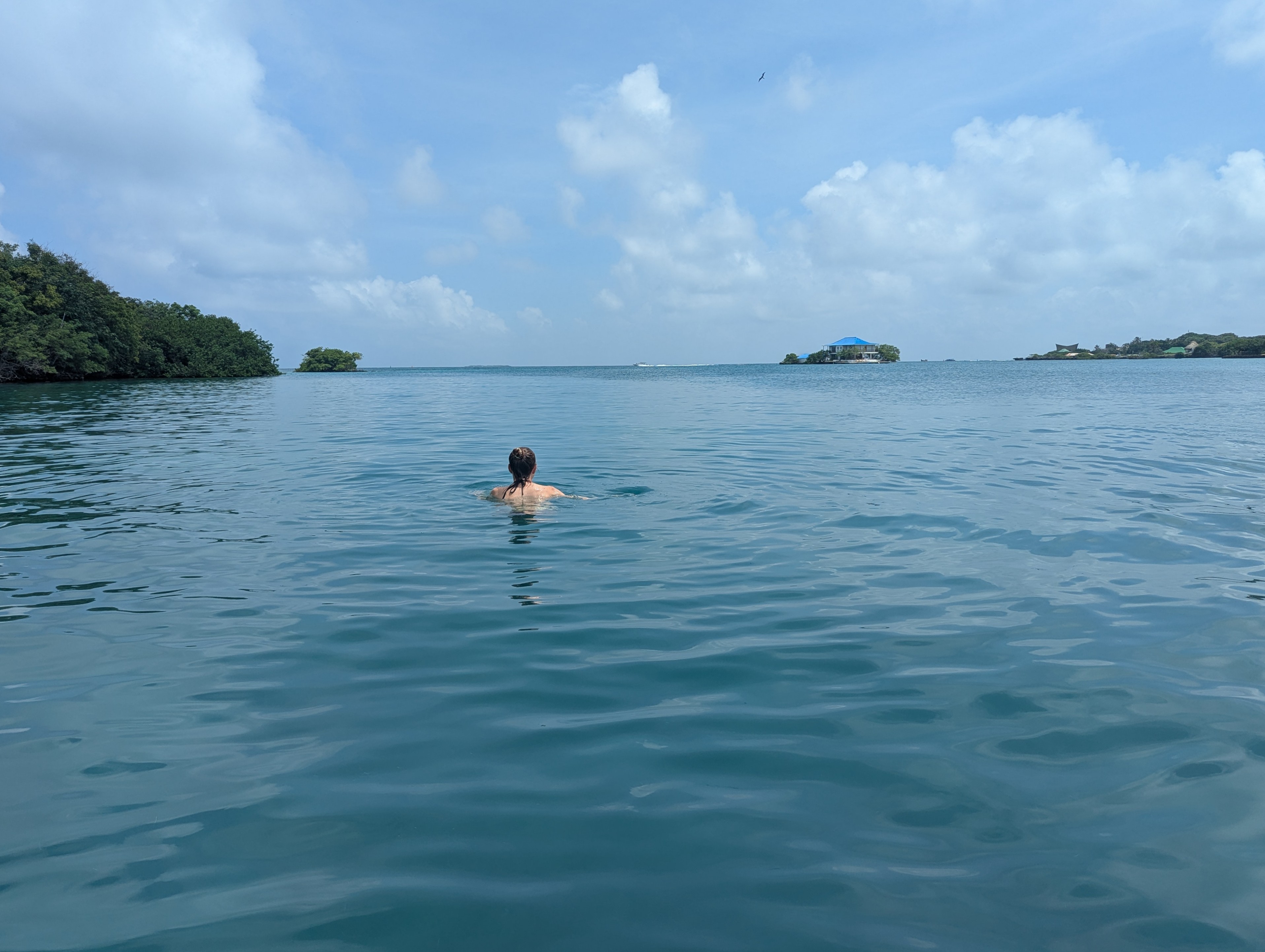
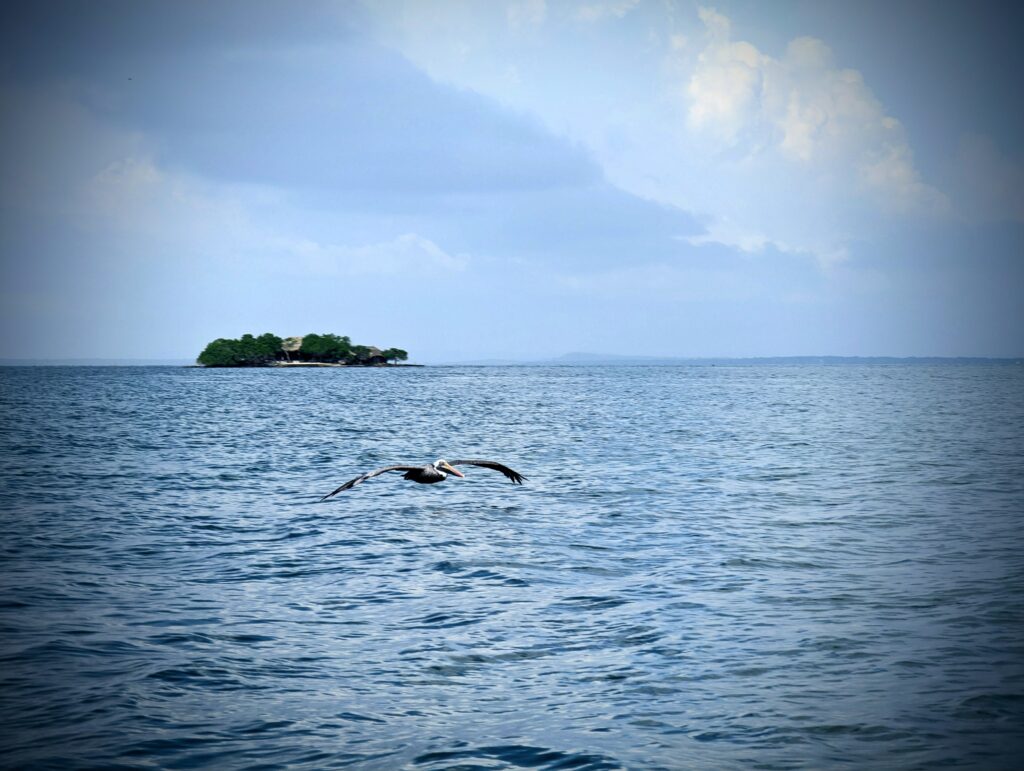
We spent our first day in Cartagena on a full day boat tour of the beautiful Rosario Islands.
The worries of the previous night quickly vanished as we hopped through beach resorts on three of the main islands, snorkelled around a coral reef and stopped by various historic buildings.
We were both caught out by the intense sun while we snorkelled and got sun burned, I would recommend bringing a t-shirt to swim in if you take the same trip!
On our second day we took a walking tour of the walled city and visited a naval museum. It was interesting to learn of Cartagena’s history as a key trading port, its conquest by Spain, independence, re-conquest by Spain, attempts by Britain to invade including a war that focussed on the city, robberies by various pirates and the gradual fortifications that followed. We also learned of Cartagena’s history as a major slave port and the legacy that has on the population of Cartagena today.
During our time in Colombia we heard three separate tour guides speak reverently about people from San Basilio de Palenque. Palenque communities were founded in Colombia in the 17th century in Colombia by escaped slaves, resulting a unique culture and Palenquero language – a mixture of Spanish and Bantu.
We didn’t manage to fit in a trip to Palenque de San Basilio but in hindsight I wish we had tried a bit harder to get there. However following the encouragement of our guide we did at least take a photo with a Palenquera woman dressed as a traditional fruit seller. Somewhat unsure if we should at first, our guide assured us that Palenquera fruit sellers were among the first black women to work independently in Colombia and that their continued presence in the main squares of Cartagena once used for slave auctions symbolised freedom and self reliance, and that supporting the Palenque community was something very positive for tourists to do.
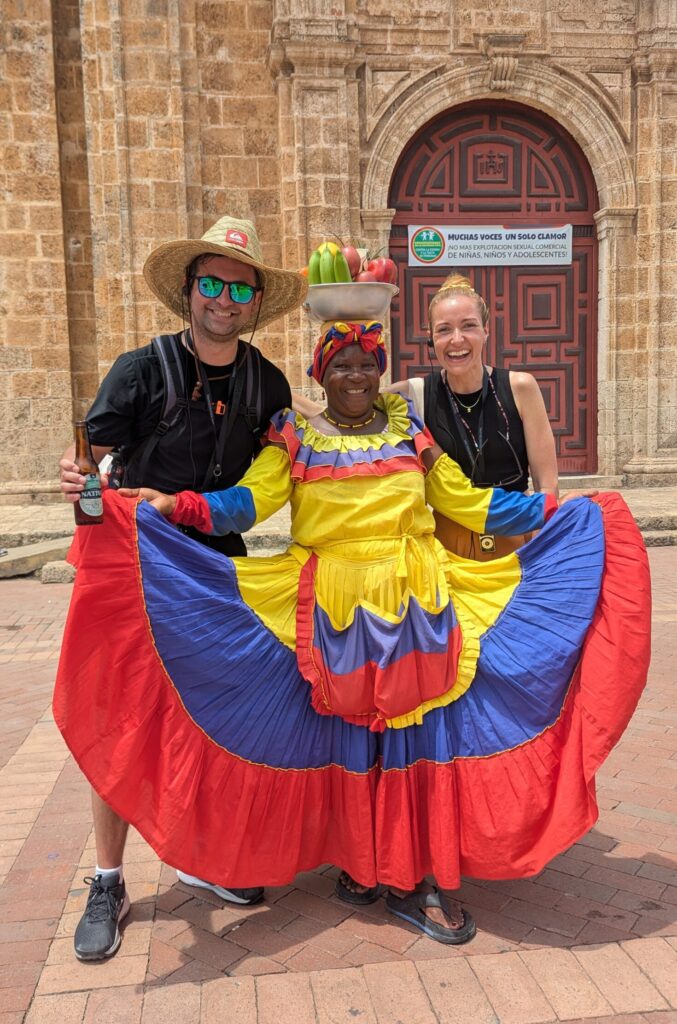
Originally there were multiple Palenque communities but today only Palenque de San Basilio remains. Here various aspects of the community is listed by UNESCO as intangible world heritage: https://ich.unesco.org/es/RL/el-espacio-cultural-de-palenque-de-san-basilio-00102
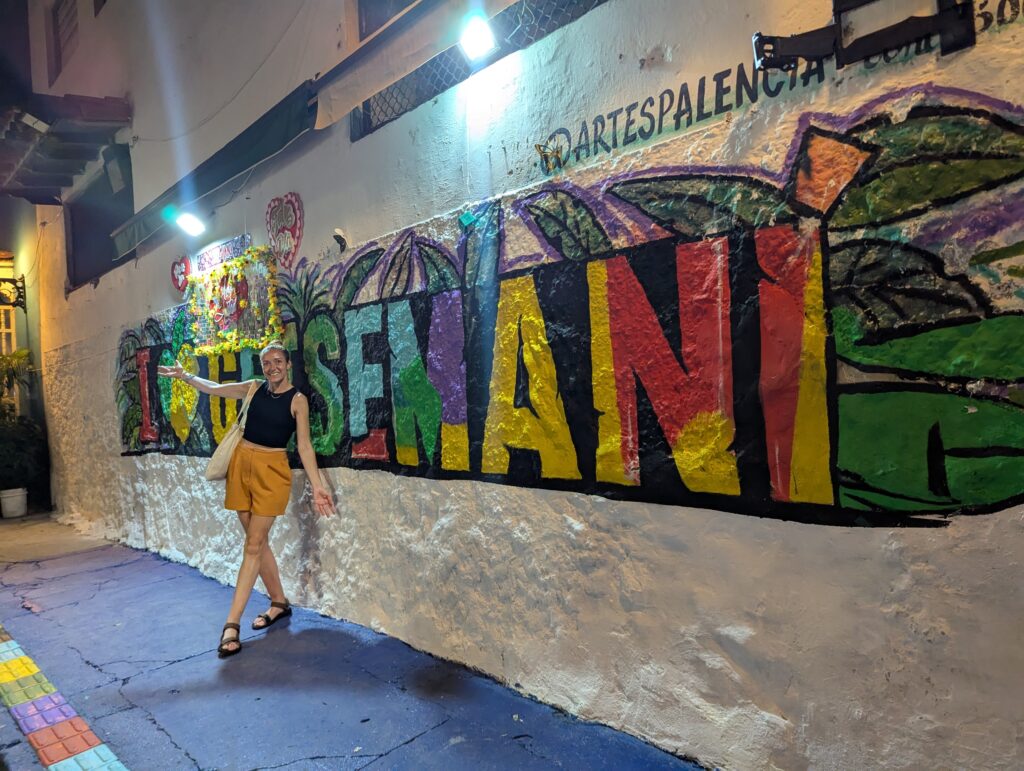
Later, we took a more local tour specifically of Getsemaní, a now very popular area of Cartagena.
We saw locals playing and arguing over dominos in the middle of the street amongst all the tourist-focussed bars and restaurants. We also saw street art of exactly the same locals in the same spot playing and arguing over dominos. The neighbourhood, although highly gentrified, still seemed to have a strong local community and feel.

On the final day we were pretty exhausted but still hadn’t seen the more upper class areas of the peninsular (e.g. Bocagrande) or any of the specifically UNESCO listed fortifications; we decided that a bus tour might be an easy way to see both and also a refreshing change from all the walking tours we normally take.
We were slightly surprised that the tour bus was the same style as the neon-clad party bus we saw on arrival, and featured an exceptionally bouncy and squeaky back seat which was slightly distracting during the tour.
We visited Castillo de San Felipe de Barajas, which was an interesting short tour and had great views across the city. This enabled our guide to give us some more visual explanations of the natural defences that surround the city and how some of the famous historic battles had transpired.
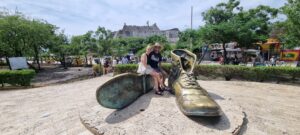
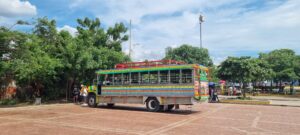
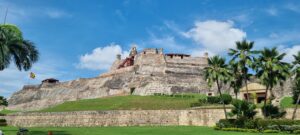
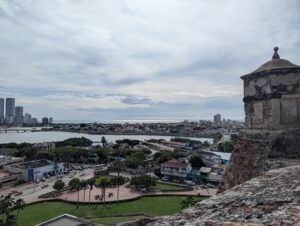
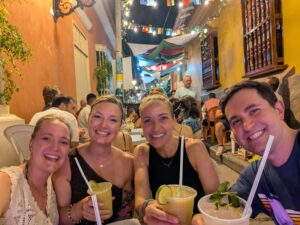
We spent the final night drinking cocktails on the narrow Getsemani streets before heading home to be ready for our onward journey the following day!