Arequipa is a city in the South West of Peru, on the Pacific side of the Andes mountains
It is normally dry, because it sits in a “rain shadow” of the Andes mountains. Typically, moisture from the pacific condenses as it rises up the Andes mountain and then falls as rain to the East of the mountain range.
It is the second most populated Peruvian city after Lima and is surrounded by three iconic volcanoes: Misti, Pichu Pichu and Chachani.
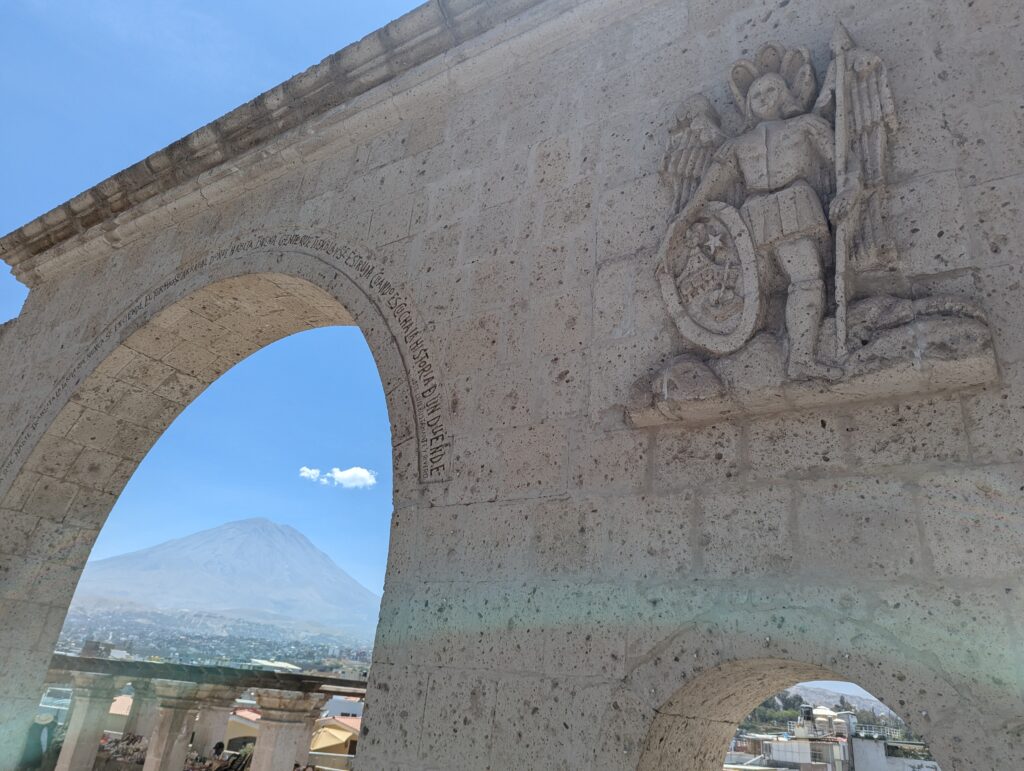
The Volcano Misti, viewed an archway made out of the Volcanic stone, at the Yanahuara viewpoint
The Journey to Arequipa
We had a brief scare on our 14 our journey to Arequipa!
We were a little apprehensive about taking a coach in Peru. Whilst we were in Lima, various news articles at the time were reporting that bus companies were being extorted by Venezuelan gangs.
As far as we understood, this was only affecting local bus services, so we went ahead with coach journeys across Peru, but we still had concerns.
We travelled via bus from Paracas to Arequipa (14 hours). The bus was comfortable, similar in style to the buses we had taken previously in Colombia and the views were similarly spectacular, however the bus did not offer any passenger stops, maybe for security.
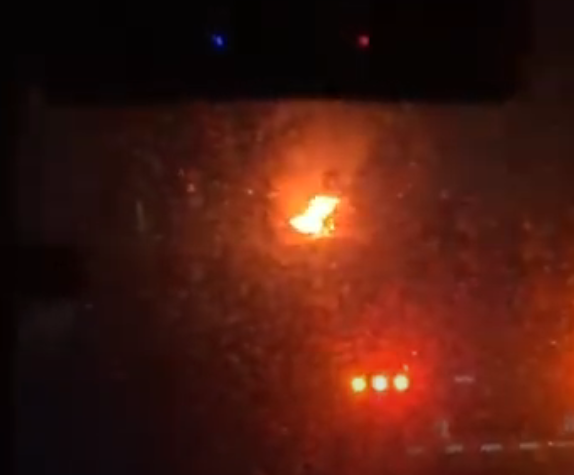
There was a frightening moment on the journey. In the middle of nowhere and well after dark, we saw a fire on the road ahead. A lorry in front of us had stopped in front of it, then began to reverse back up the hill towards us. My mind immediately jumped back to the articles of gangs targeting bus companies, was this how our coach was being stopped before some kind of robbery?
After stopping again, the lorry slowly started to drive forwards again, turning and going around the fire. Our coach followed slowly, a video of the moment is shown below.
Only when we were past the fire did we see that there was an overturned lorry blocking the road beyond the fire and there was actually another fire beyond that lorry. No one was attempting to blockade the road to rob buses, they had actually set tyres alight to warn traffic of the lorry lying in the road in total darkness.
We arrived in Arequipa later that night without any further scares!
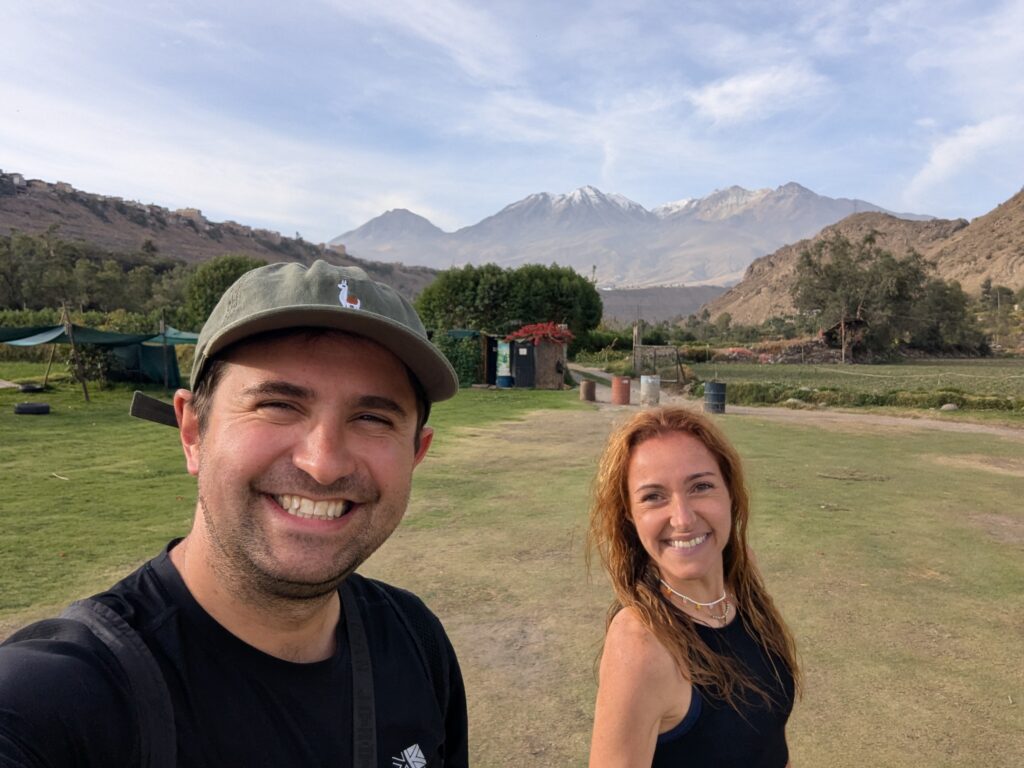
Daylight brought beautiful views of Arequipa and the famous volcanoes that surround it; we were ready to explore!
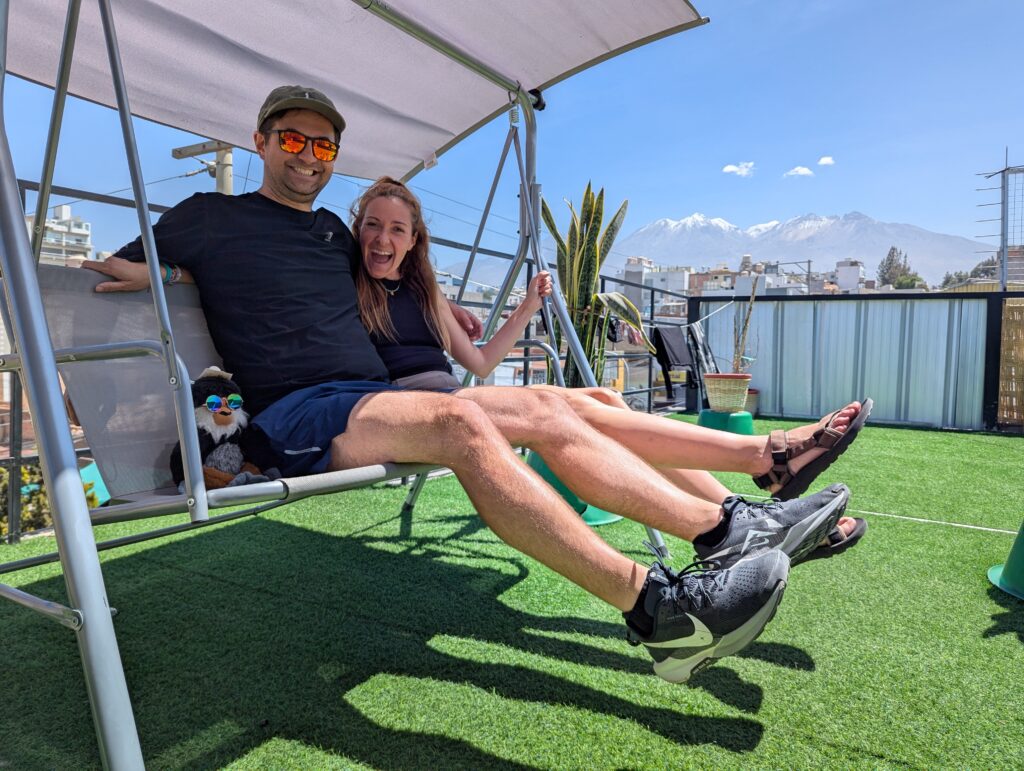
Relaxing on the roof of the hostel
Rafting
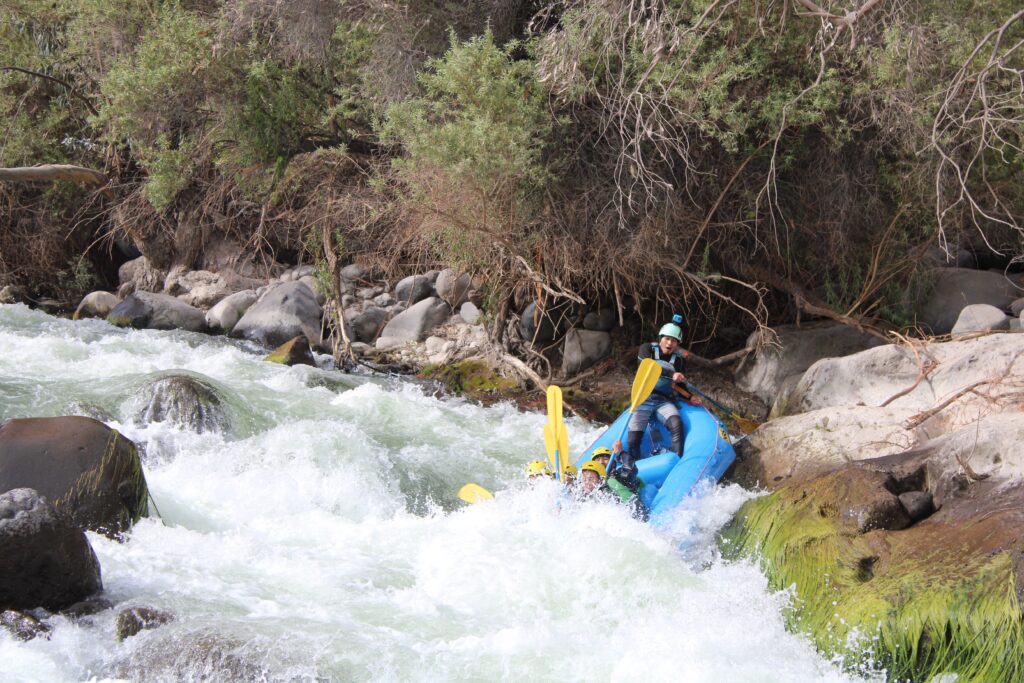
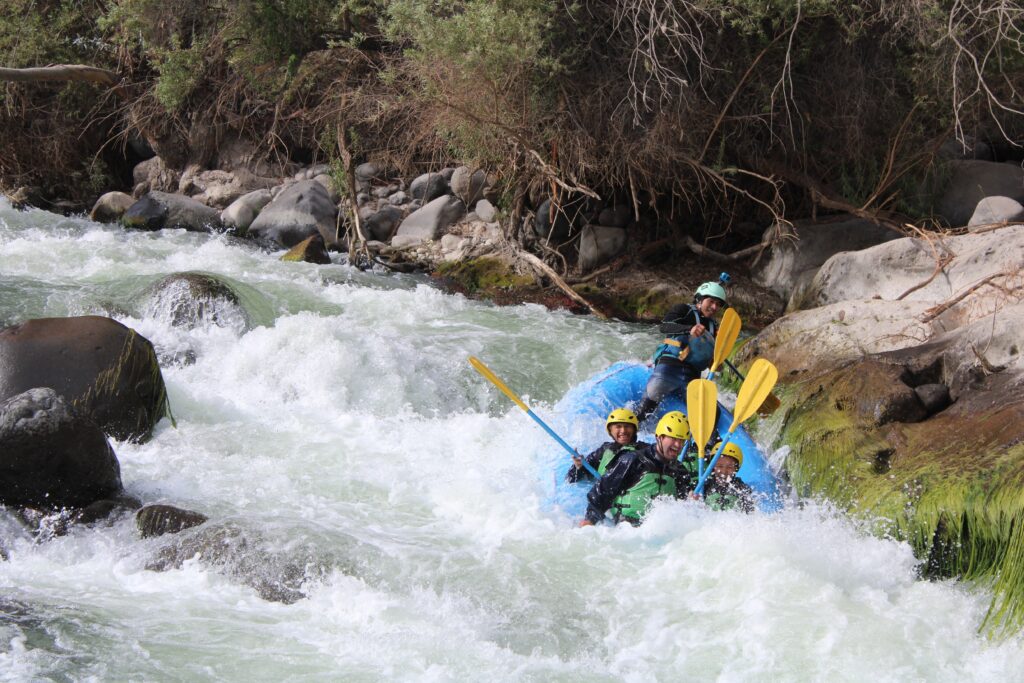
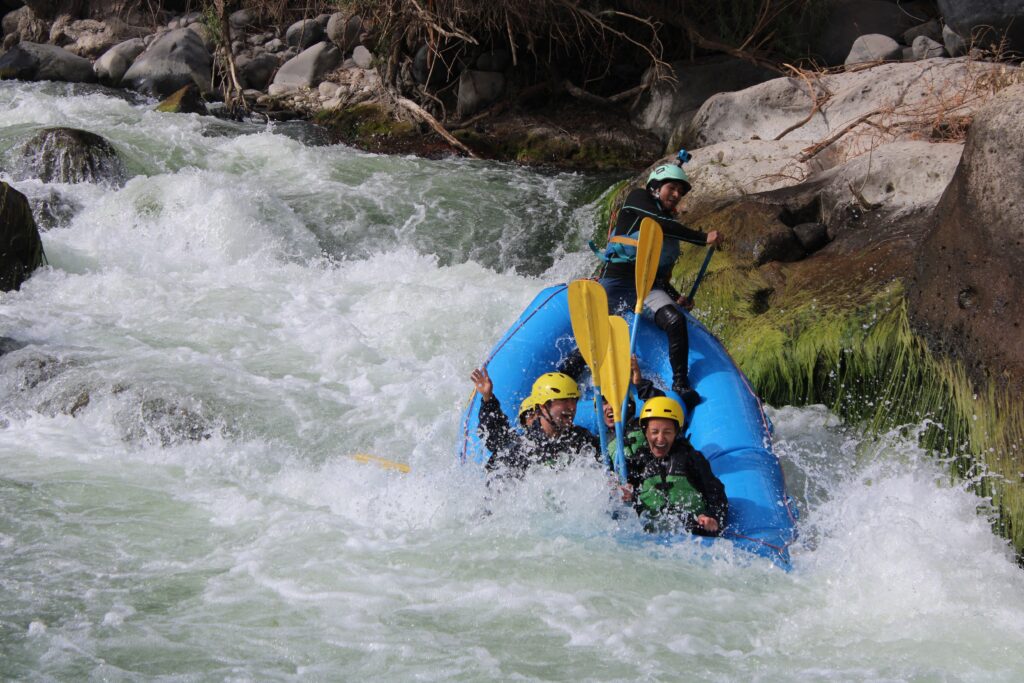
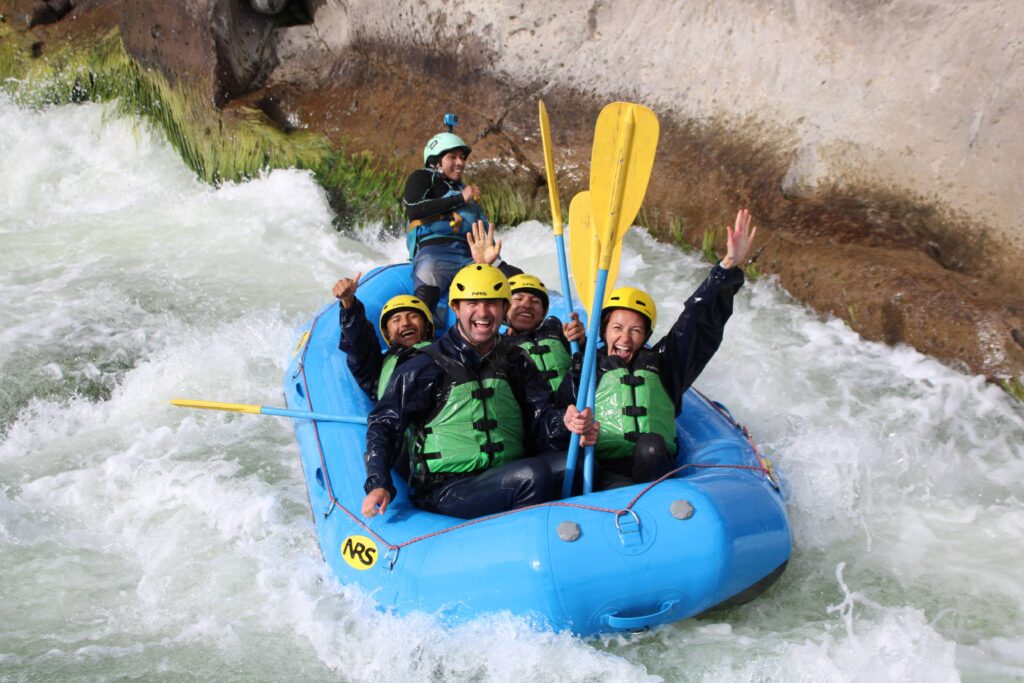
On our first day in Arequipa we decided to go white-water rafting.
This is something that I’ve wanted to do for my whole life, so when I saw our hostel advertising availability that same day for around £15 per person, I did not hesitate to make the booking!
It was clear when we arrived to the location of the rafting that nearly everyone doing the activity were English speakers. In the search for Spanish speakers to accompany some Peruvians, our collective Spanish speaking capabilities were detected by the organisers, and my doubts about my own proficiency were brushed aside – so my safety was now going to be supported by ability to understand instructions in Spanish!
We rehearsed the meaning of the commands “Adelante”, “Dentro”, “Arriba” and “Posiciones”, then we were on our way!
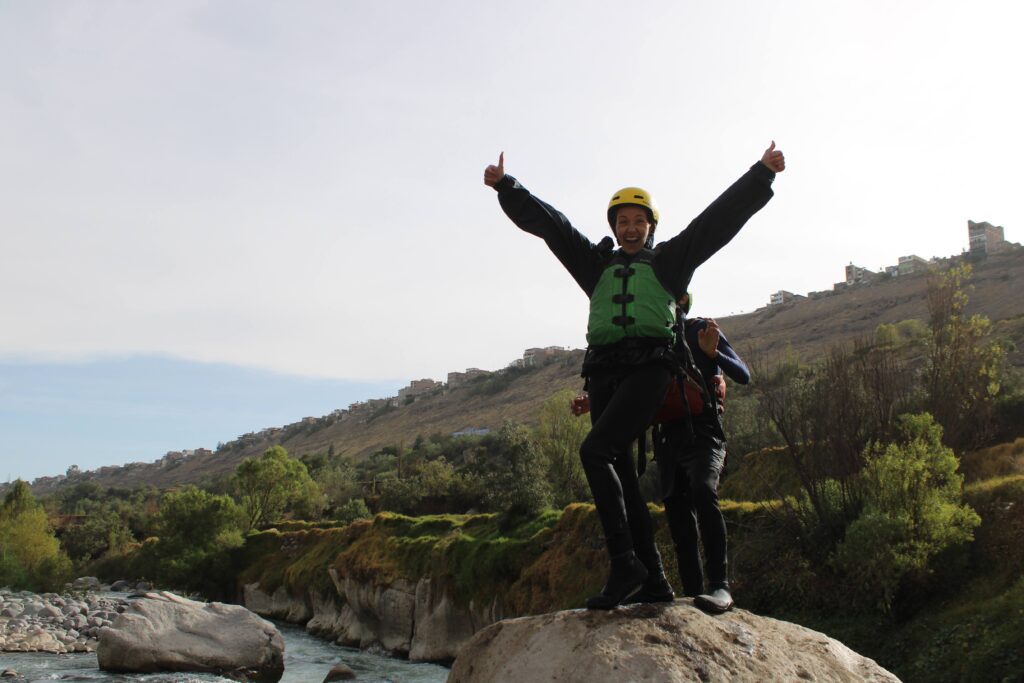
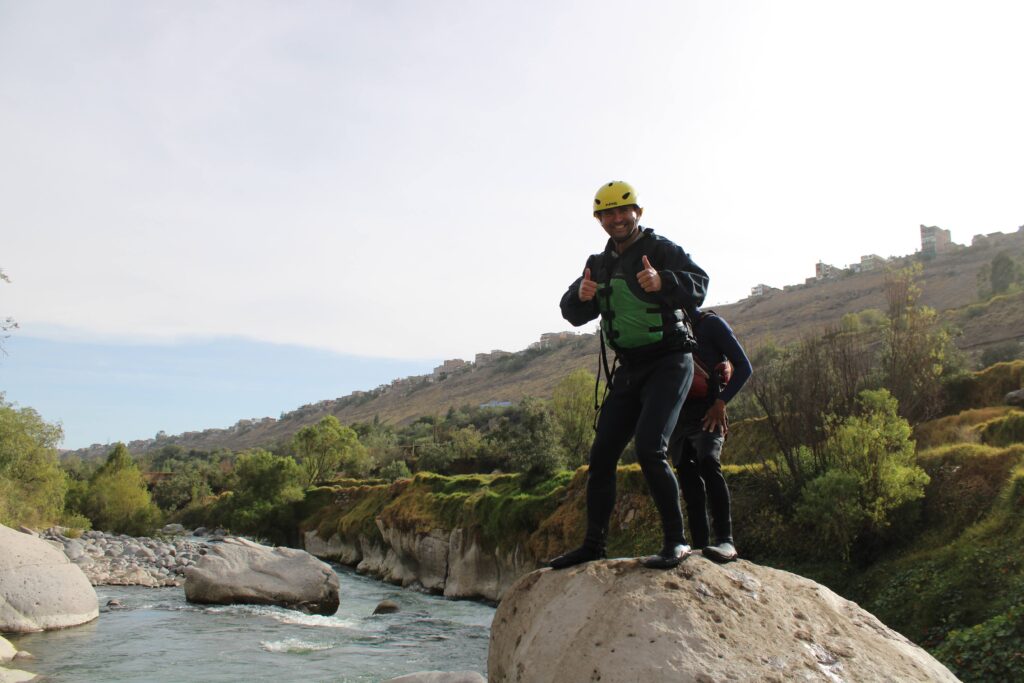
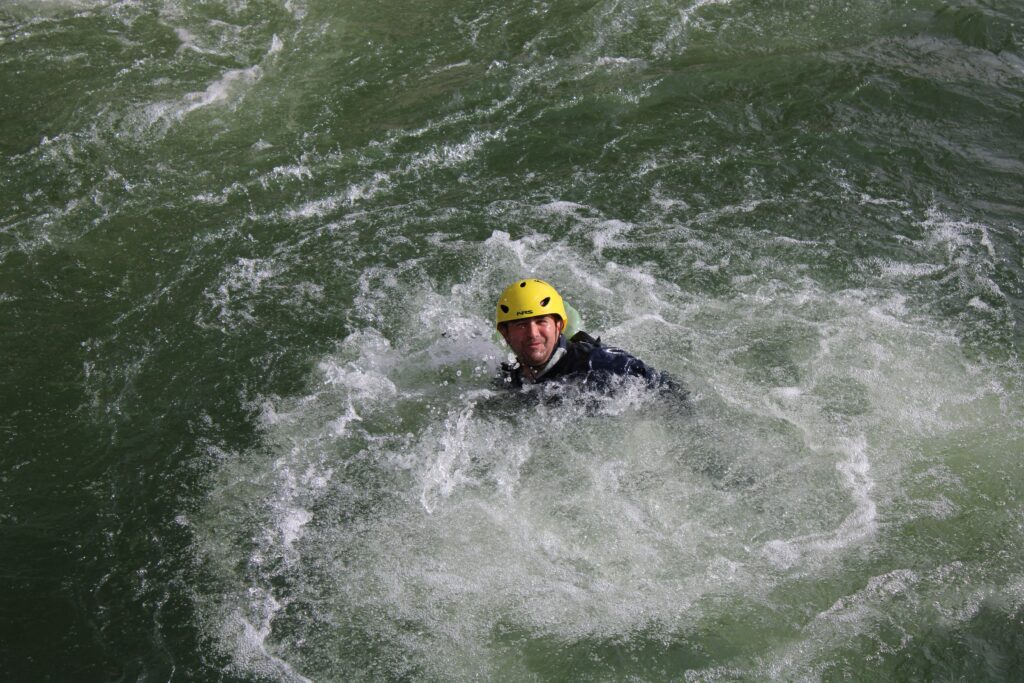
The experience was everything I hoped it would be and much more, incredible fun I will remember for the rest of my life! I think the photos and videos in this section show just how much fun it was!
Colca Canyon
We visited Colca Canyon, famously home to enormous Andean Condors.
The canyon has steep sides which produce up-drafts of air which the enormous Condors use to ascend into the sky each morning. They intelligently use these kinds of up-drafts all day to stay at great altitudes with minimal effort, looking for large dead animals to eat, before coming back to the valleys to sleep at night.
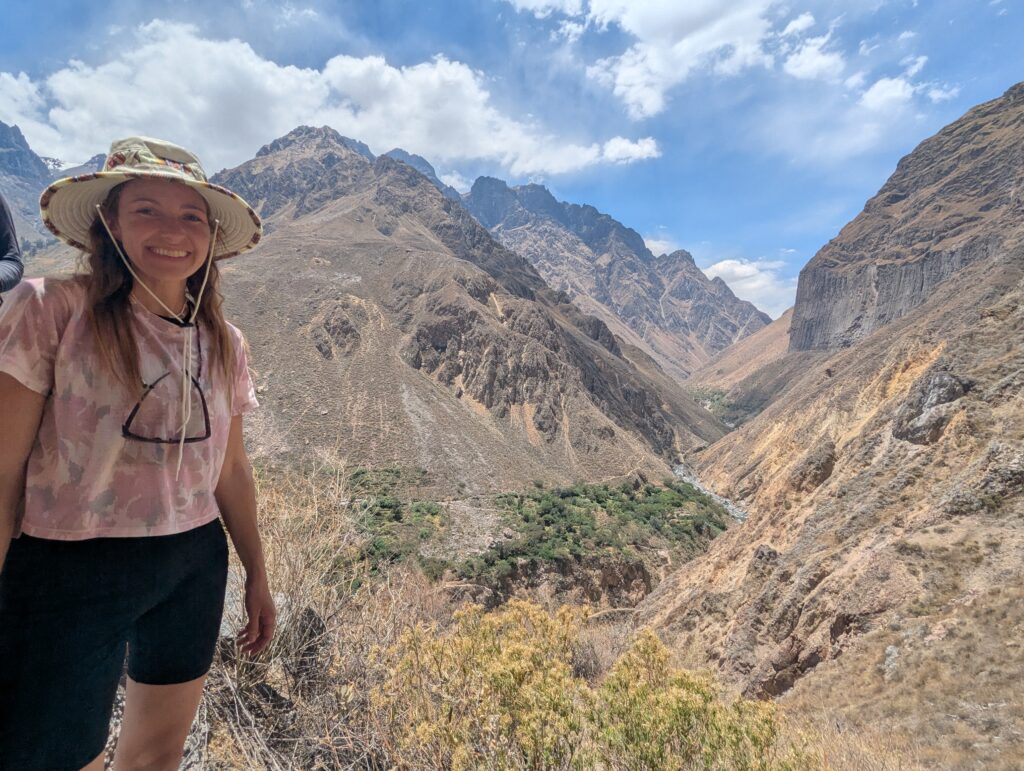
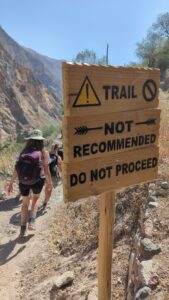
We opted to do a guided two-day trek with an overnight stay at the bottom of the canyon. The route was similar to the All Trails route shown below, but instead of taking the right turn up to Cosñinhua we went straight across, ignoring the warning sign where the paths split.
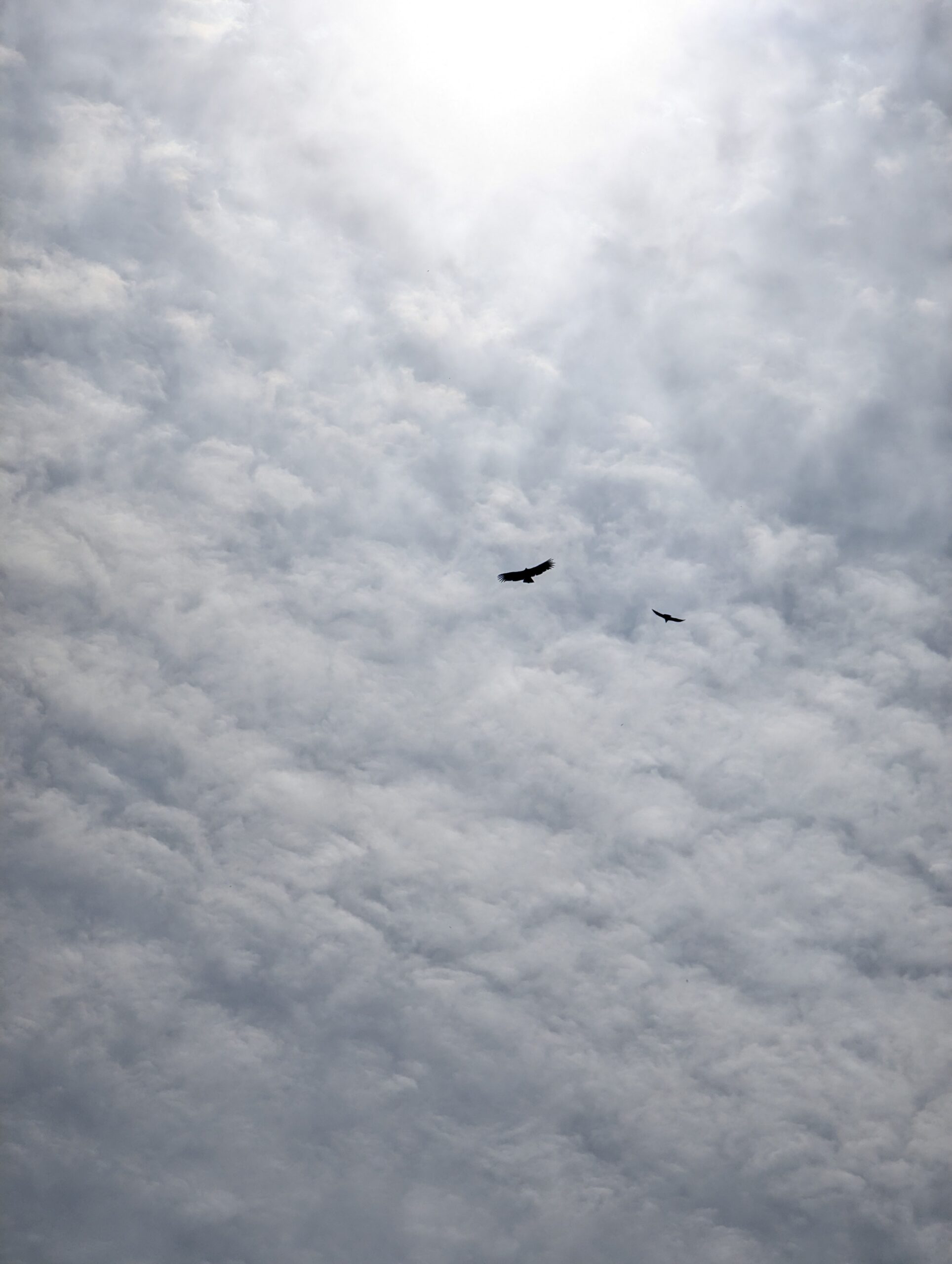
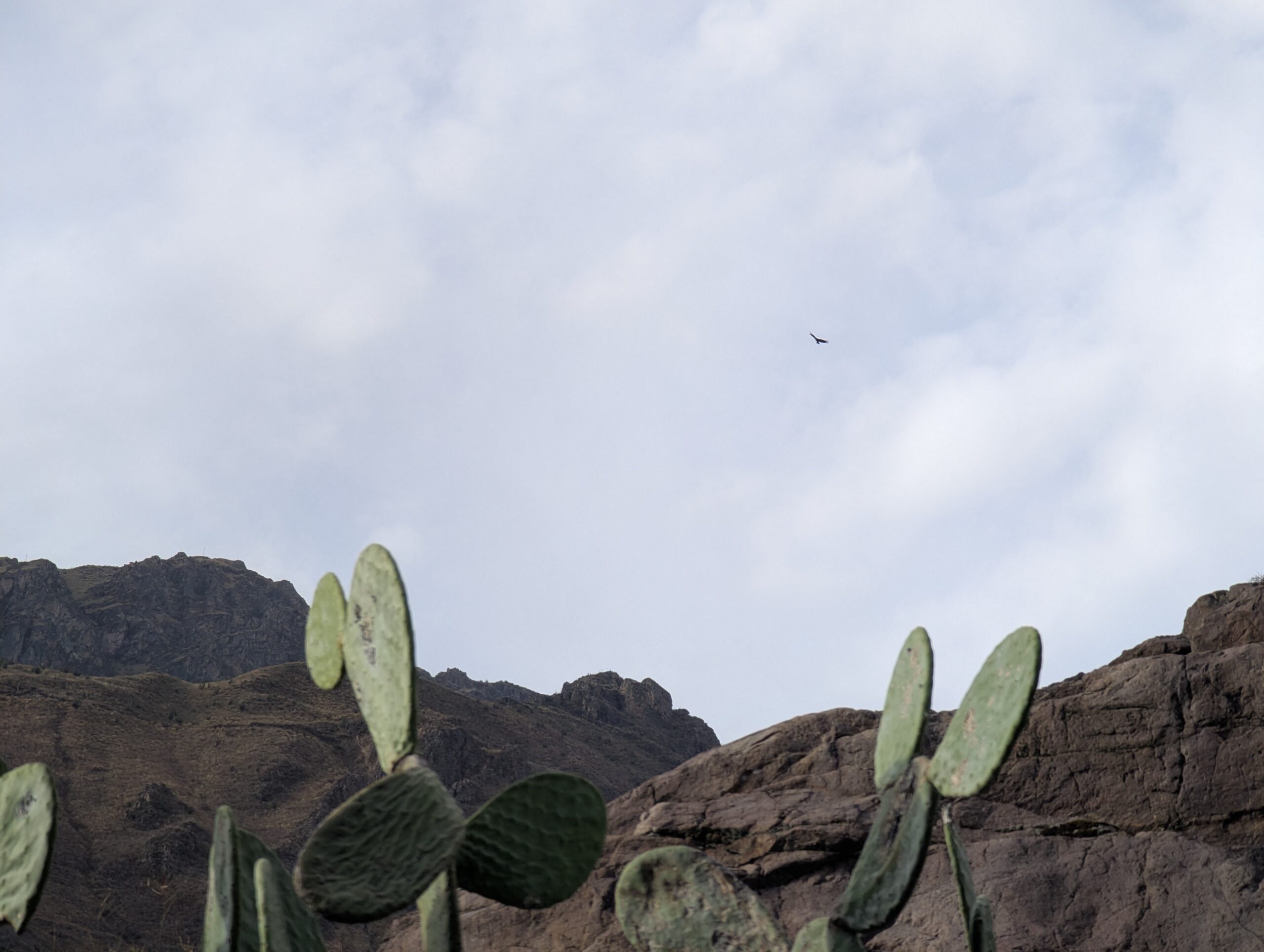
We were lucky enough to see three Condors flying overhead during the trek: two at the start and one at the end of the second day.
A pair of Condors flying close to Colca Canyon
Condor-watching
A Condor flying over Colca Canyon
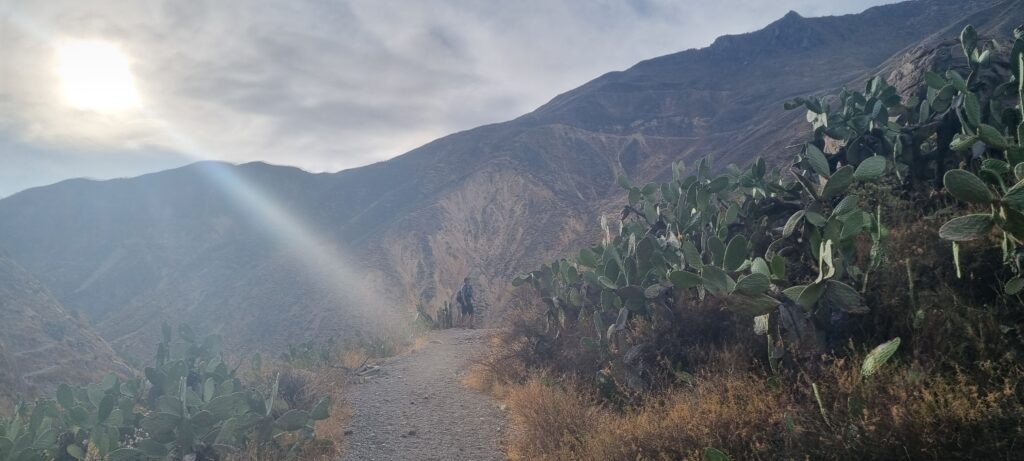
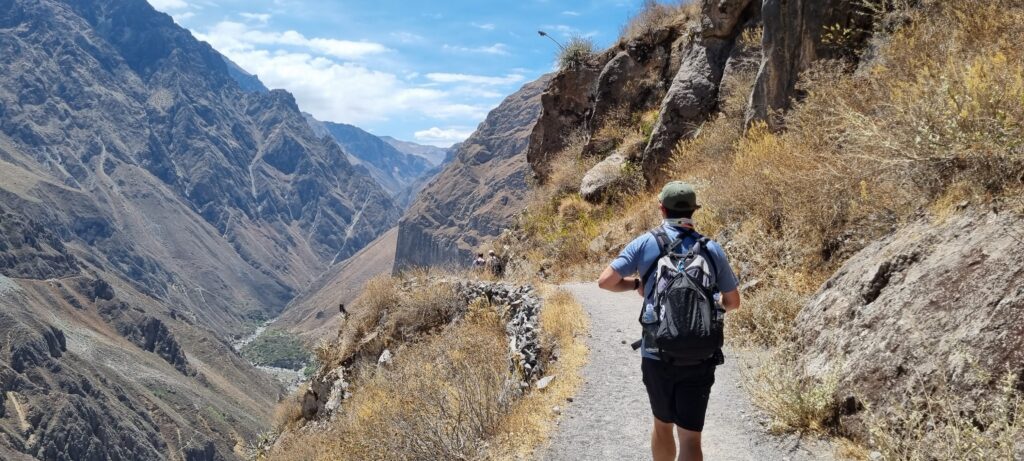
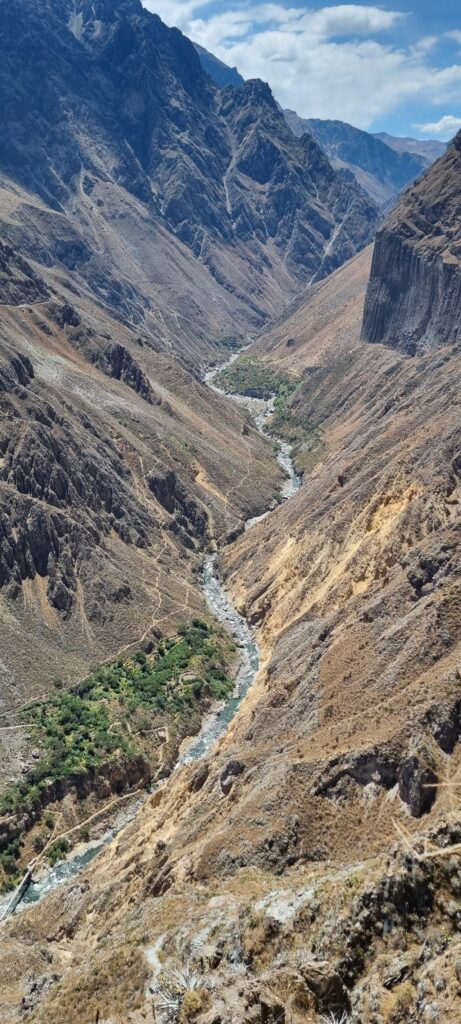
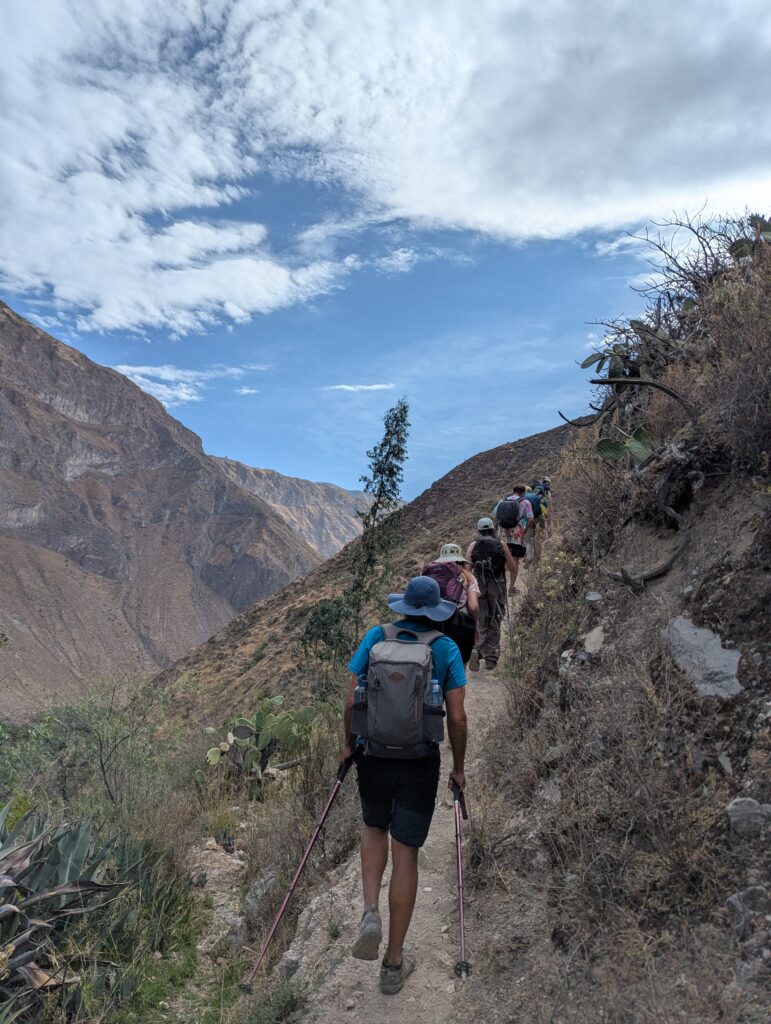
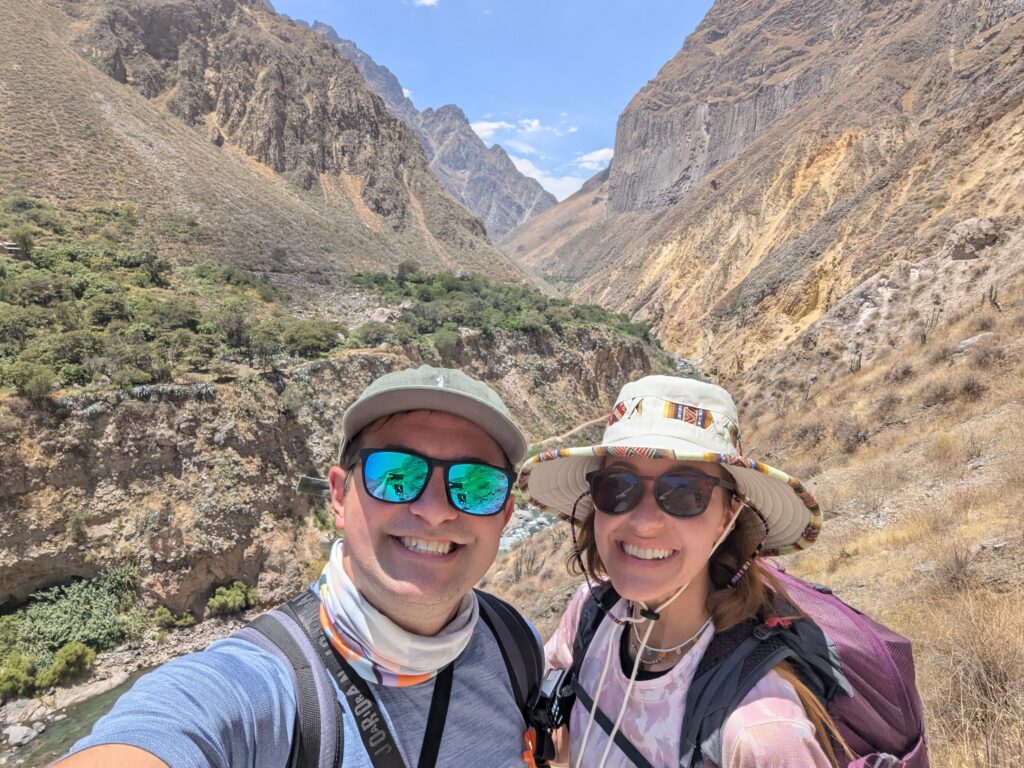
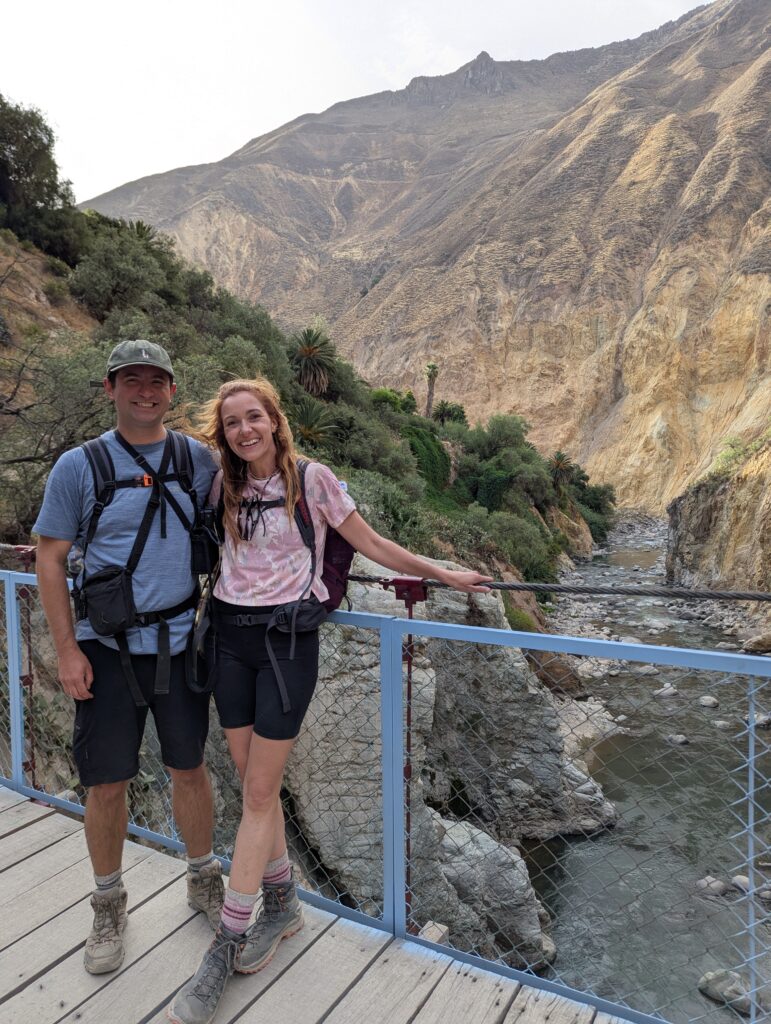
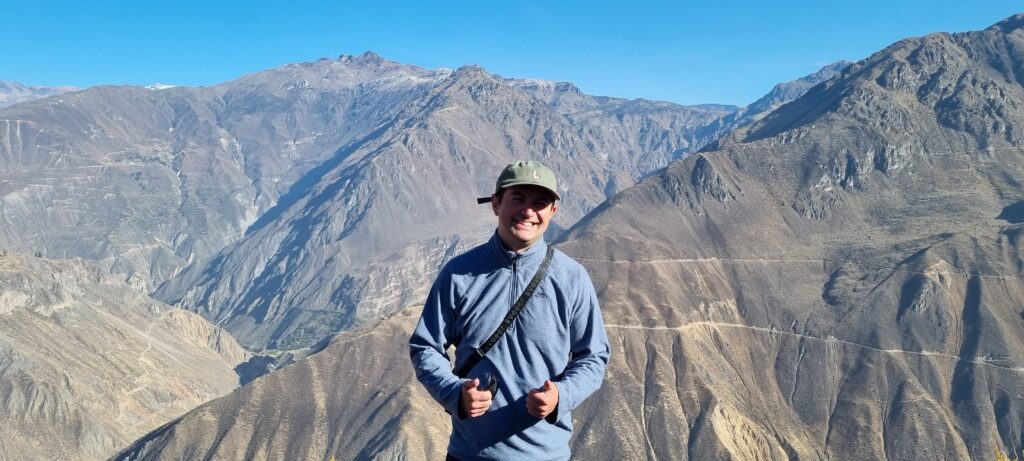
The first day was a relatively easy trek, generally down into the valley. The scenery was breath-taking all the way.
Starting the trek into the spectacular scenery
A view of the Rio Colca
The first rest point
The sign we ignored!
The group starting the trek after lunch
Half way through the afternoon!
The end of day one!
At the end of the first day we discovered that our eco-lodge had a swimming pool, hammocks and was nowhere near as basic as we feared, you can see an image from the property’s Instagram page embedded below.
The swimming pool is completely fresh, emptied each day and re-filled with water from the river!
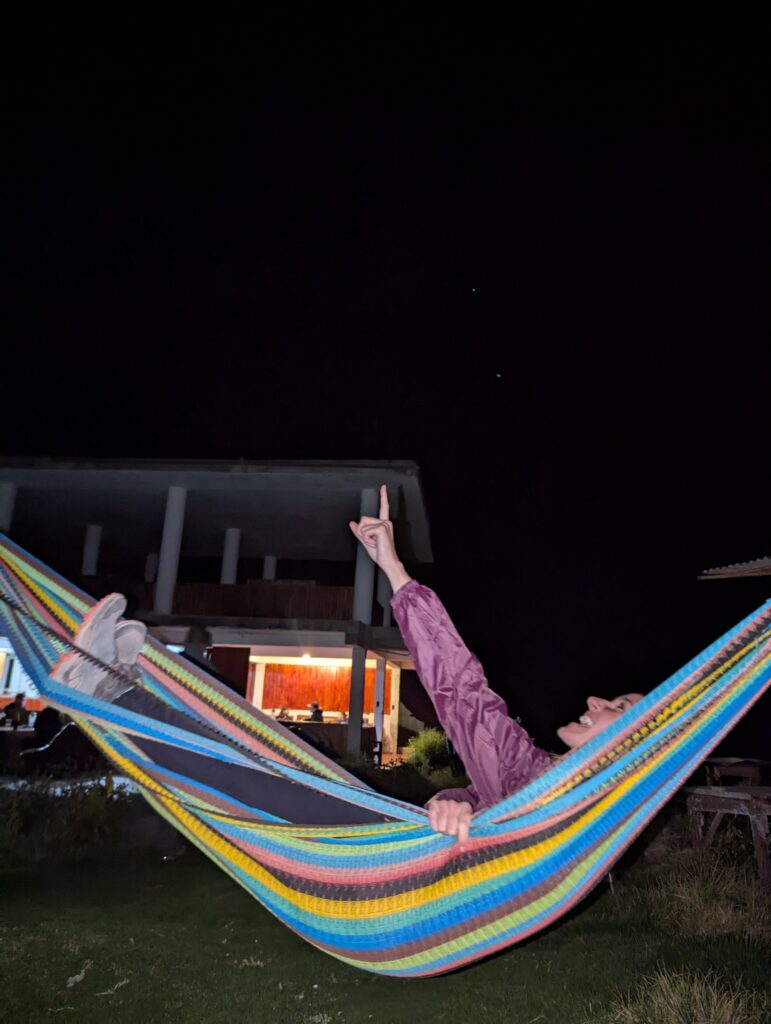
We had a big wood-roasted meal, looked for shooting stars and then settled into bed!
Star-gazing at night
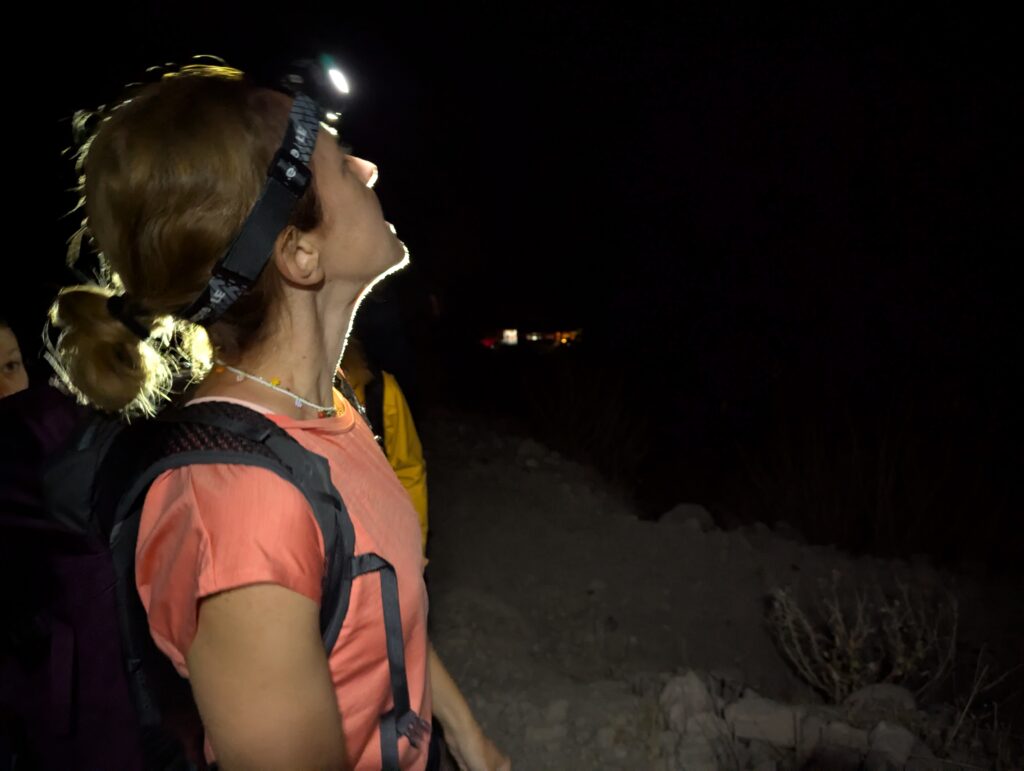
The morning of the second day was quite intense, starting in total darkness at around 4 AM.
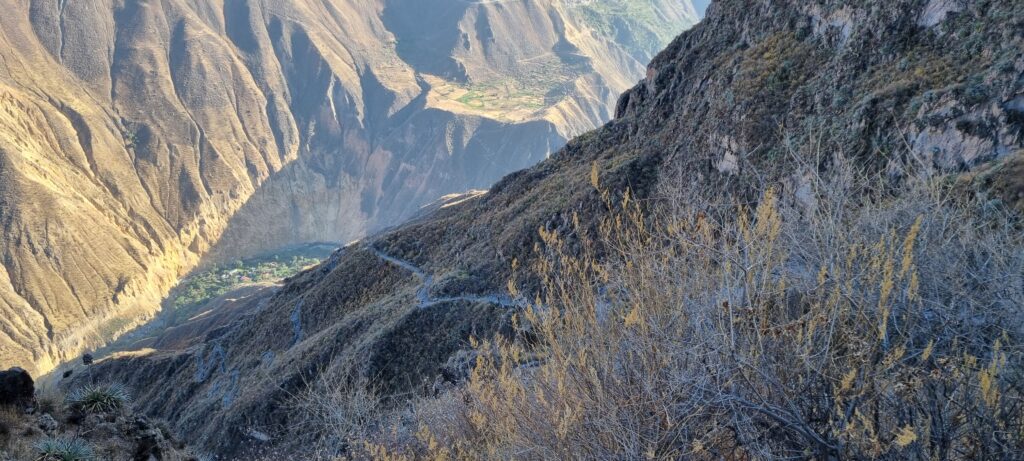
It was a continuous and unrelenting climb back up the valley, ascending 1km in height over a 4km walk, finally getting back up to an altitude over 3200m above sea level.
It was tough, the altitude and this type of multi-day trek was new to us. We were also hiking without trekking poles which was definitely a mistake.
Looking up at the path at 4AM
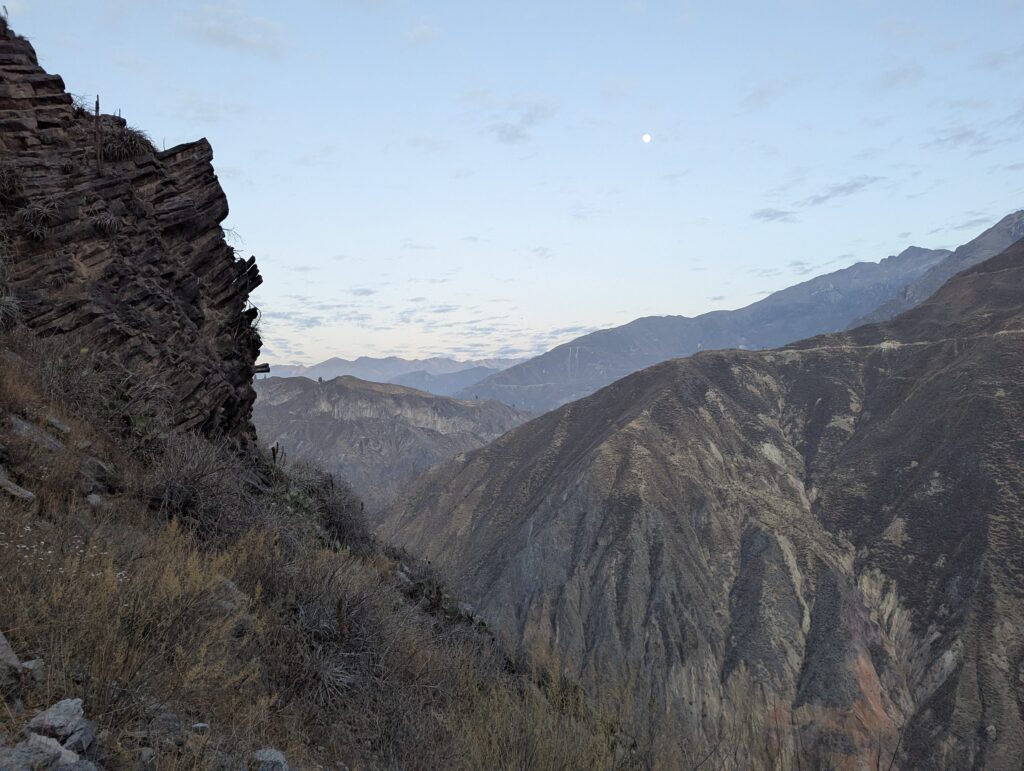
The moon still visible, half way back up
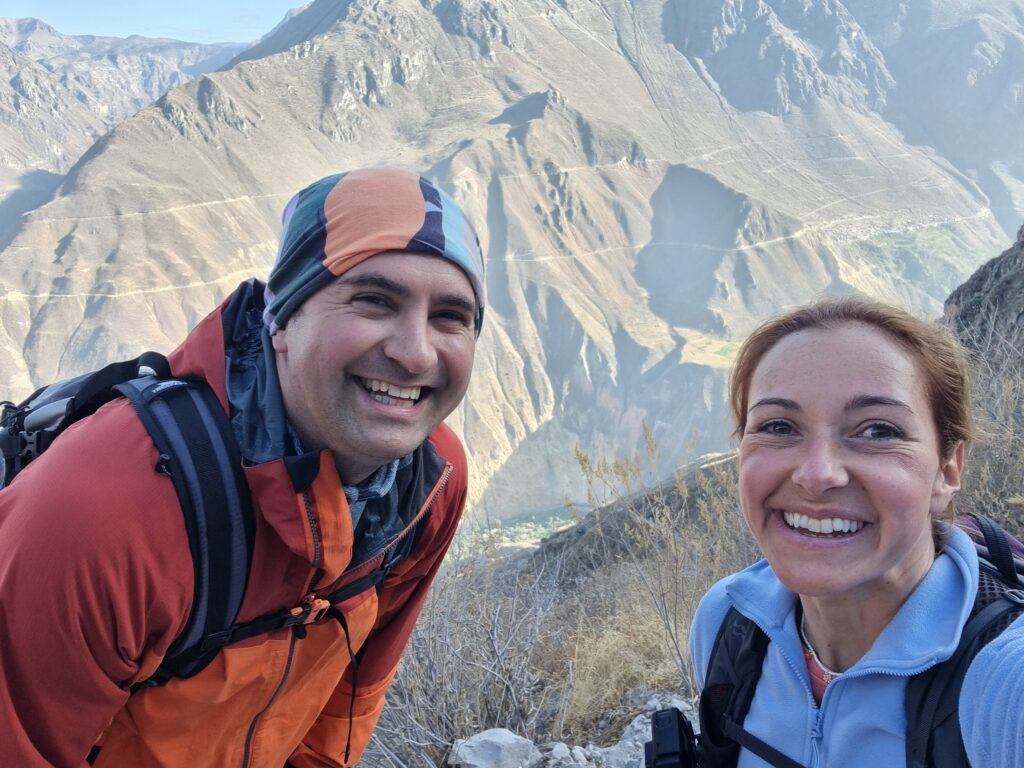
Happy to be half-way!
A view of the path up from the bottom to half way!
After 3 hours, finally back up to the top!
However eventually we both made it back up without the aid of a donkey (which other groups had resorted to)!
You can click on the strava link below to see the challenging continuous altitude gain!
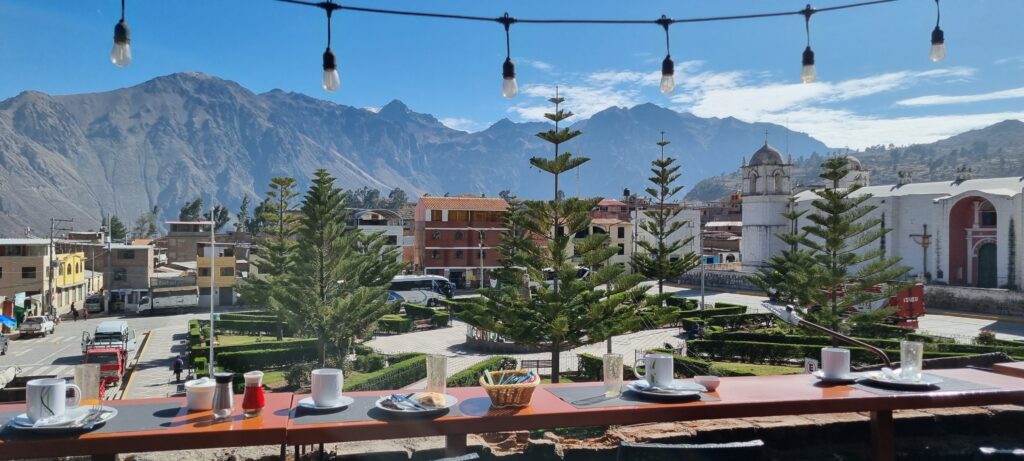
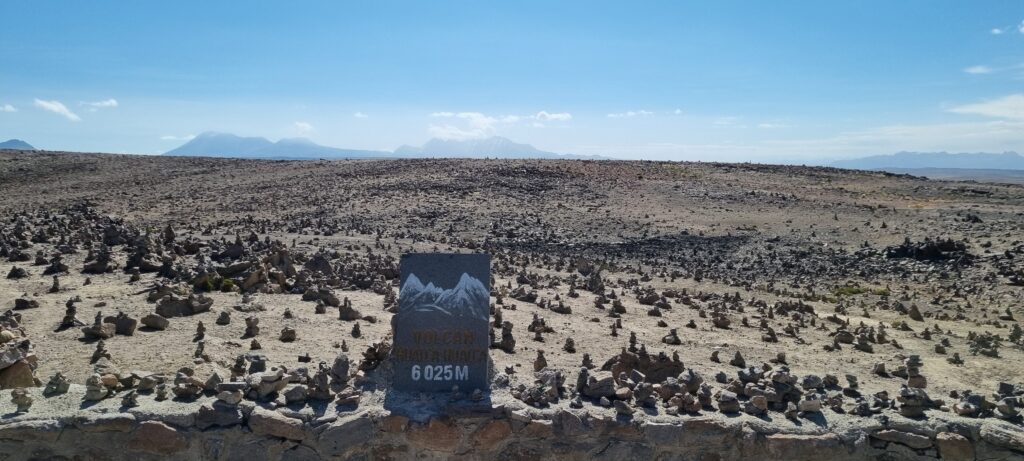
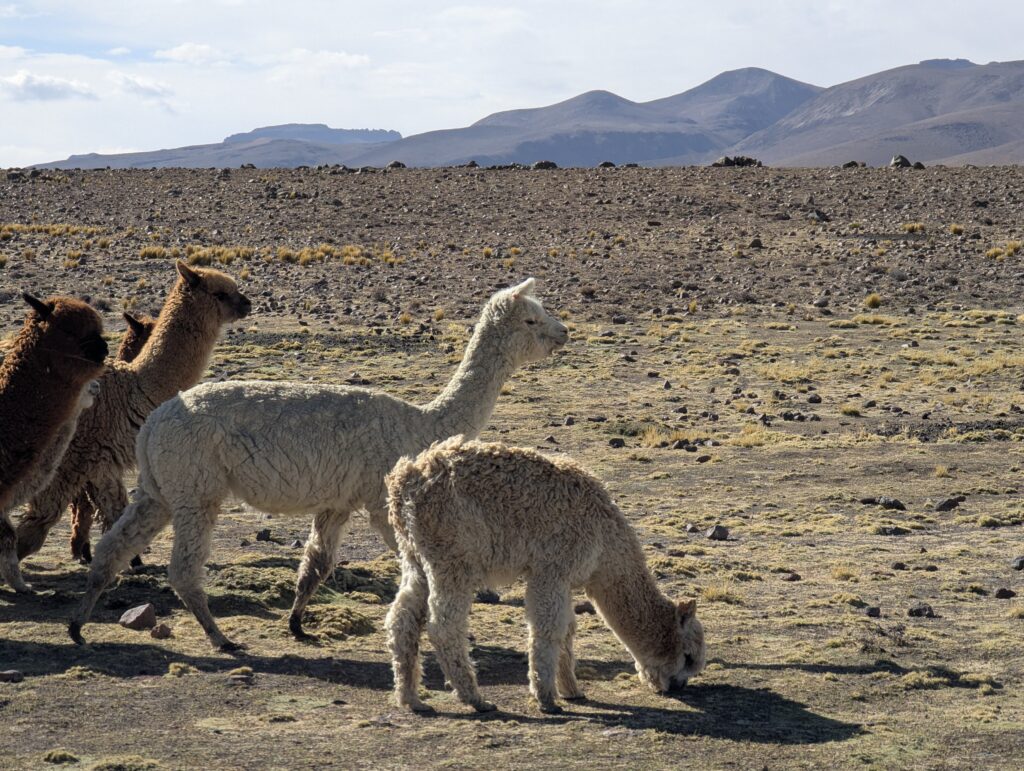
After, we stopped for a nice breakfast, stopped for volcano views, to see alpacas and for a relaxing swim in thermal baths.
We alternated between the hot water and the cold river to soothe those aching muscles!